About this template
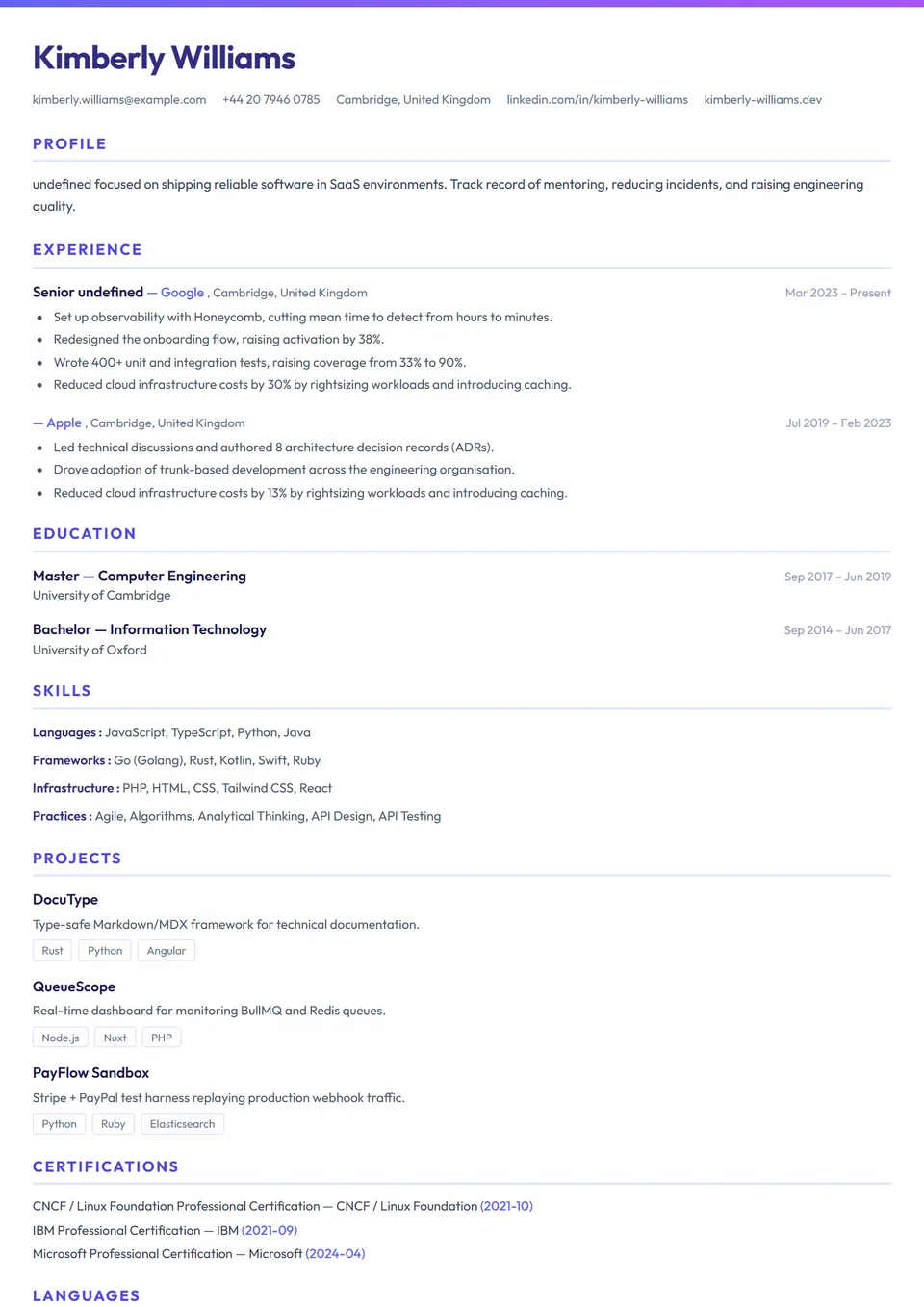
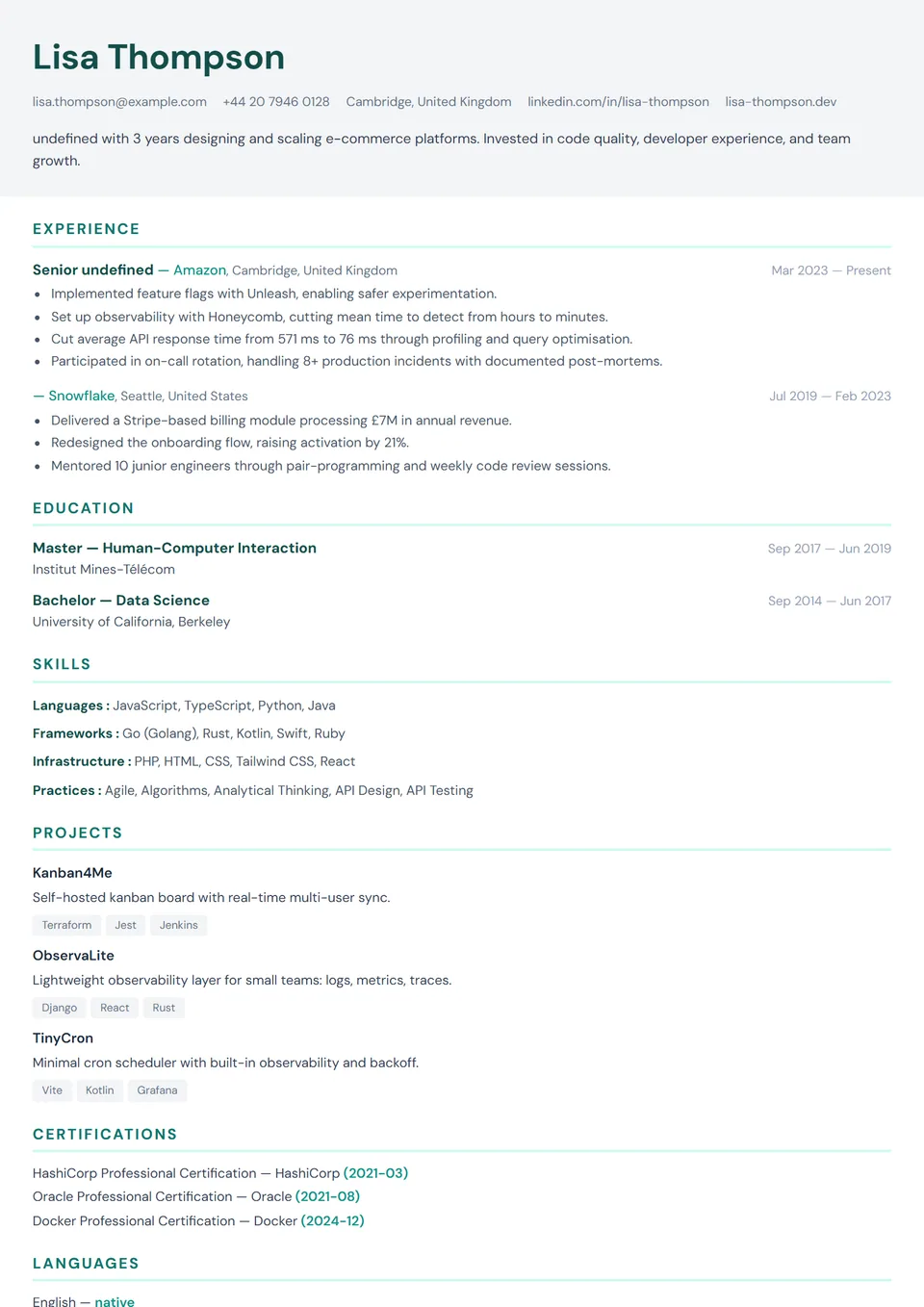
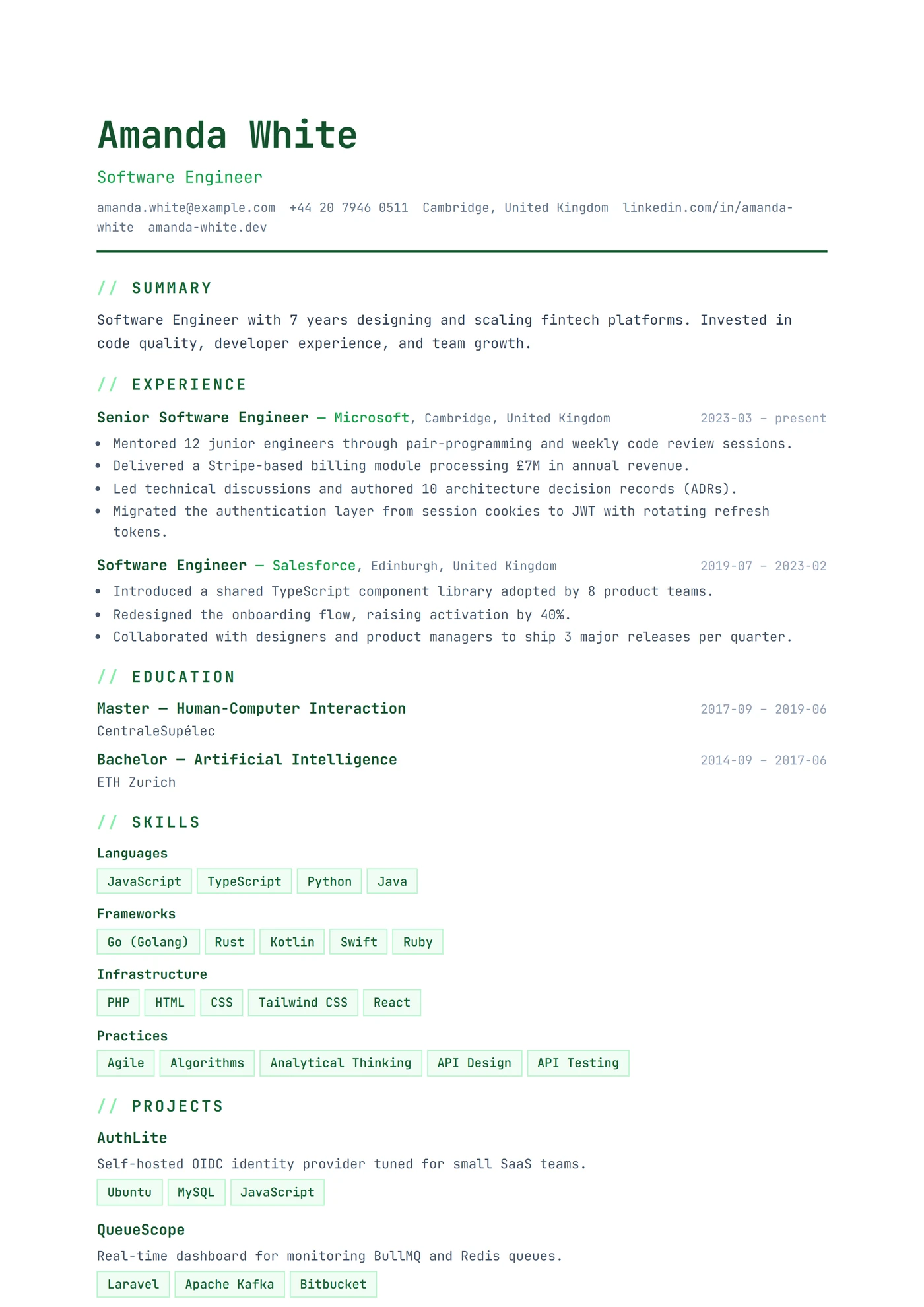
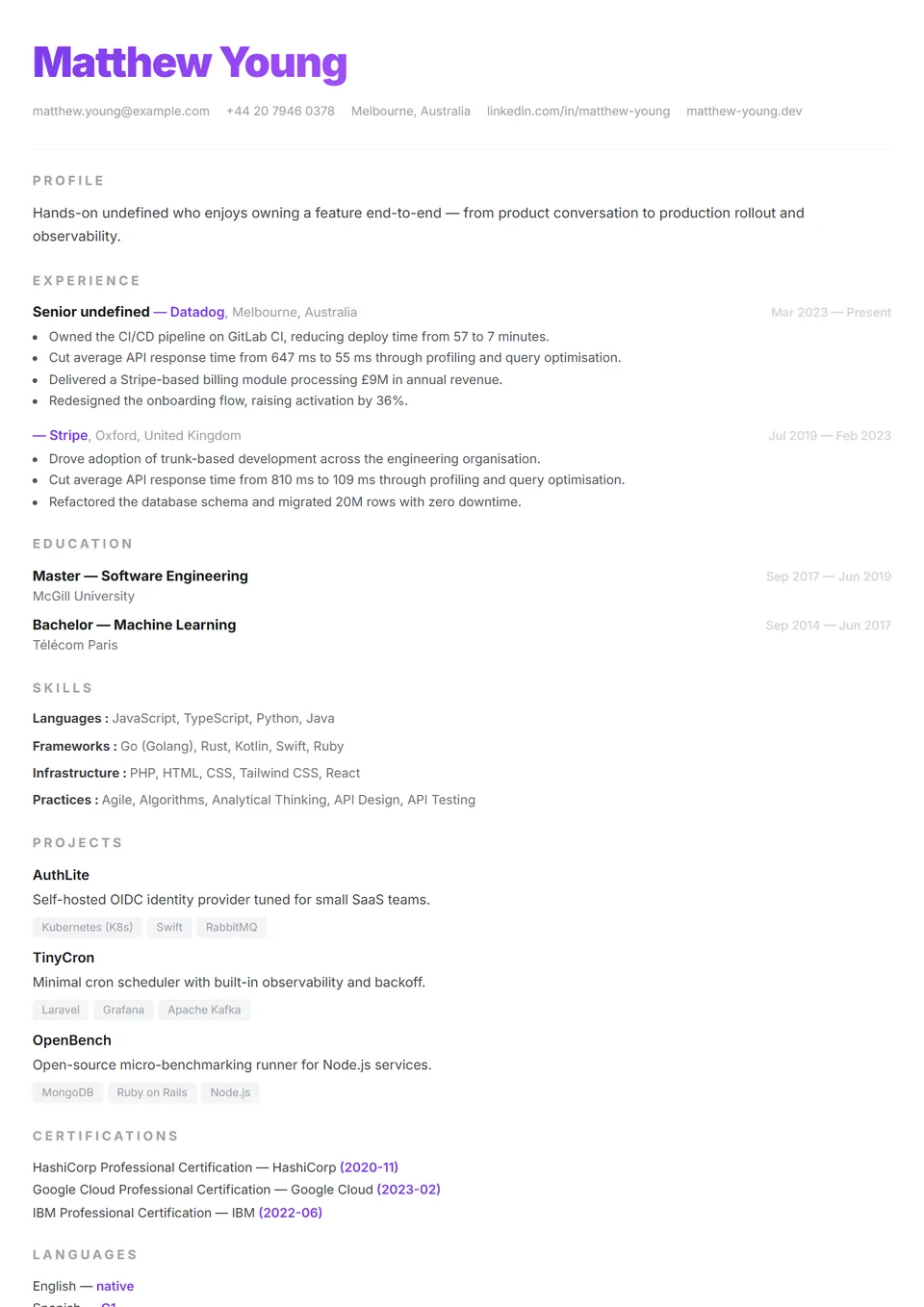
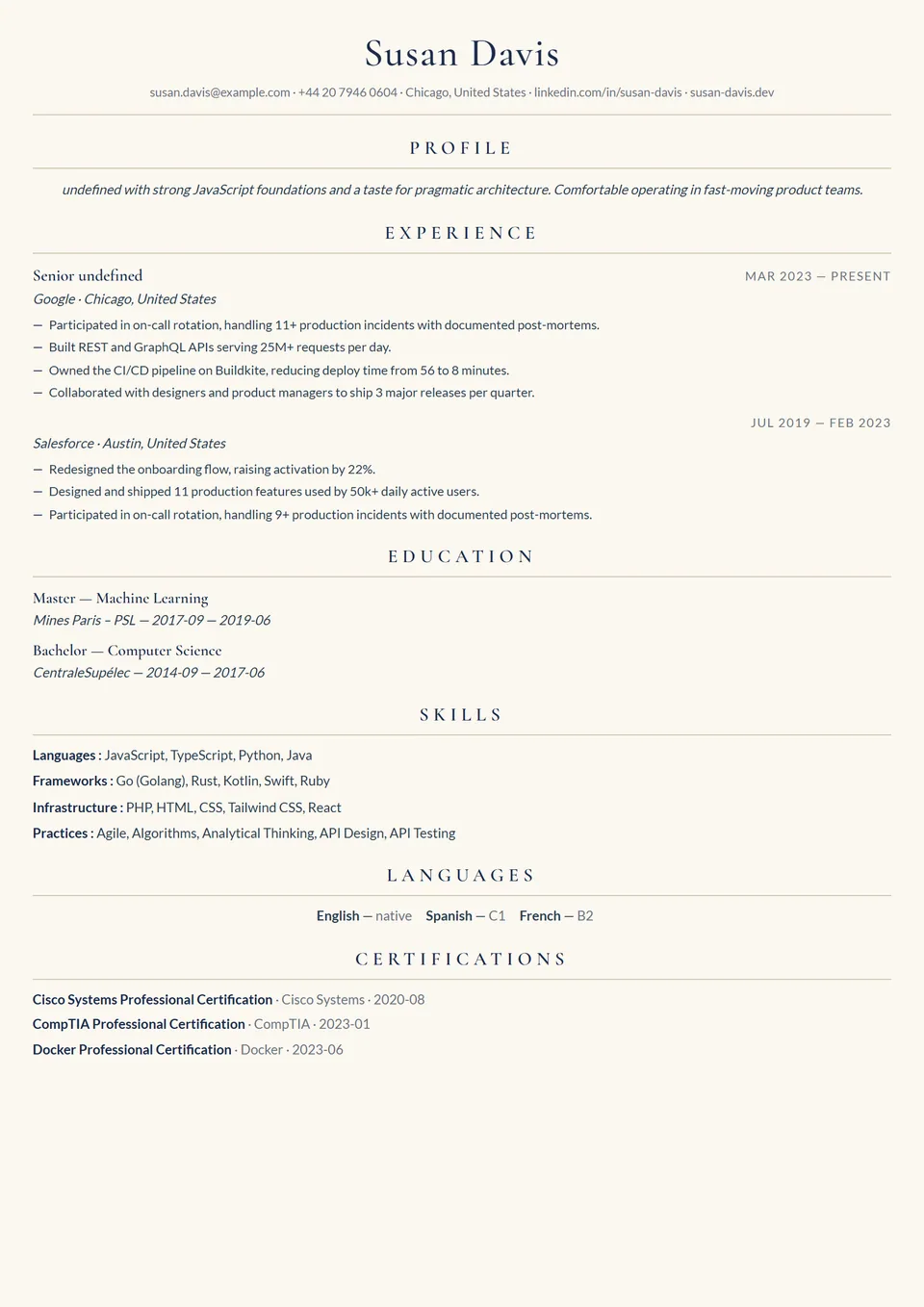
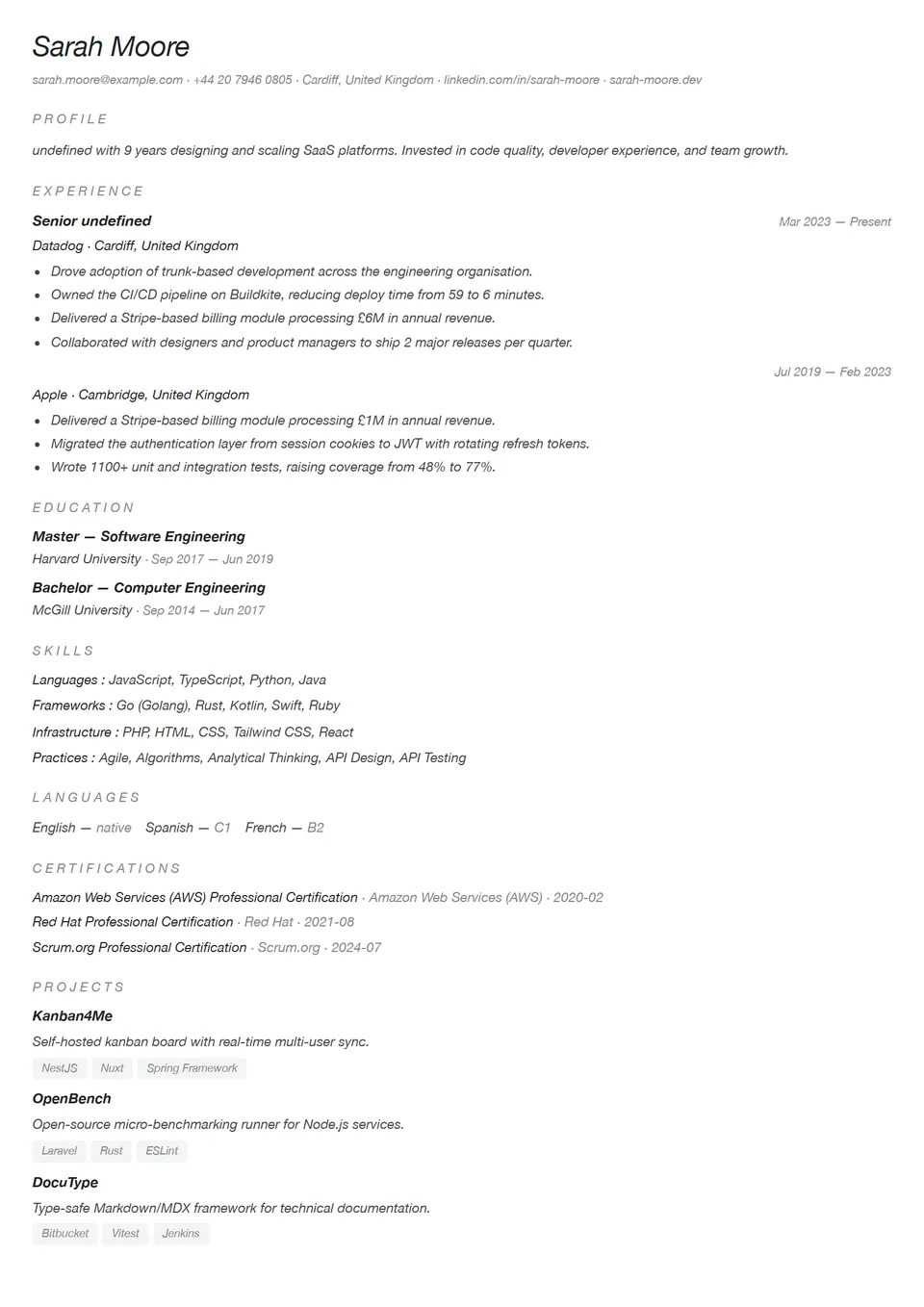
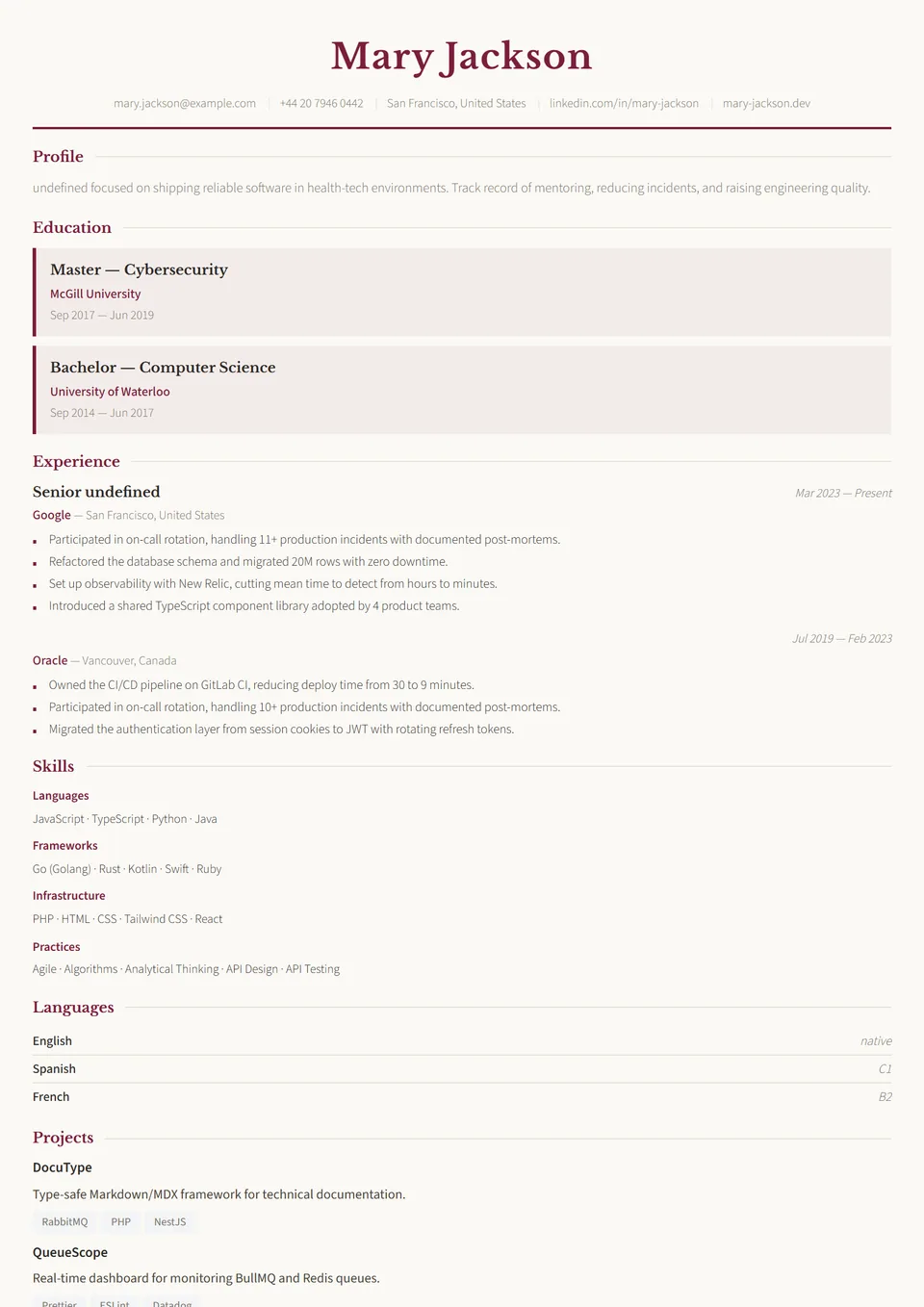
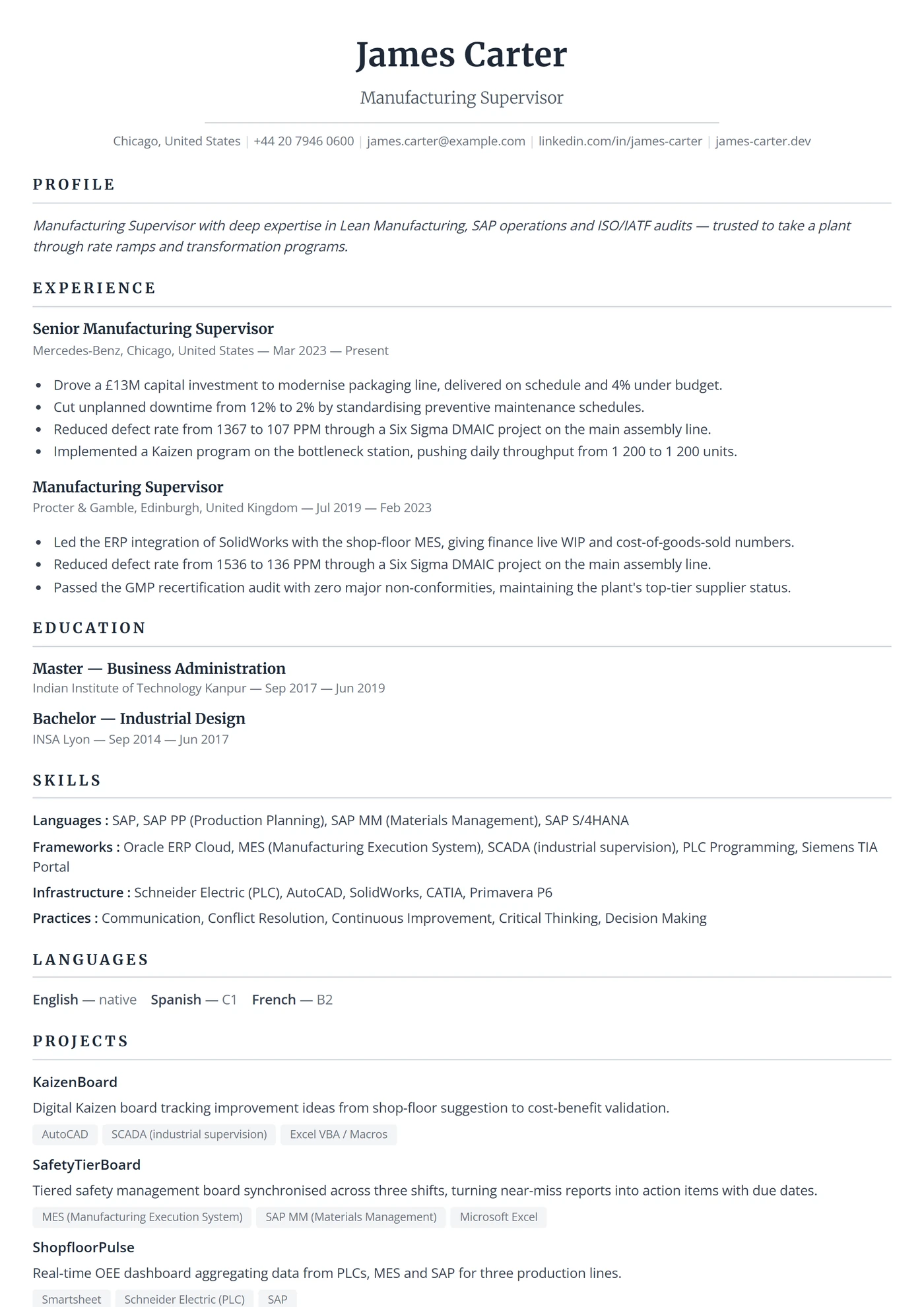
The Modern Future Lab template is a futuristic CV in Space Grotesk (headlines) and Inter (body), set on midnight paper with electric cyan accents and JetBrains Mono labels. The page evokes a research-lab dashboard: thin grid lines, indexed sections and tagged metrics. Designed for profiles who think in systems, sensors and architectures, it signals immediate cultural belonging to the frontier-tech world.
Who is it for?
It suits AI/ML researchers, deep learning engineers, deep-tech founders, platform architects and robotics engineers applying to OpenAI, Anthropic, DeepMind, Mistral AI, Hugging Face, NVIDIA Research, Meta FAIR, Google Research, public research labs (MIT CSAIL, Stanford AI Lab, Allen Institute, Inria) and their spin-offs. Equally fitting for candidates targeting deep-tech accelerators (Y Combinator AI track, Conviction Embed, Air Street Capital) and frontier-tech VCs.
How to use it
Structure by research axes rather than employers. For each axis, list NeurIPS, ICML, ICLR or CVPR publications with arXiv links, open-sourced models (Hugging Face Hub, GitHub) and patents filed. Add a 'Compute and infrastructure' block detailing compute budgets managed (GPU hours, cluster size, pre-processed dataset volumes). For academic profiles, include Google Scholar h-index and total citation count — these metrics are expected by deep-tech recruiters and frontier VCs alike.
Frequently asked questions
How should I present open-sourced models?
One line per model: name, Hugging Face Hub link, monthly downloads, tasks covered (classification, generation, embeddings). Example: 'bert-multilingual-legal — 12k DL/month — legal document classification across 6 languages'. This information is central for OpenAI, Hugging Face, Mistral and Anthropic who score profiles on community adoption of past research outputs.
How much space should publications take in this CV?
A dedicated section, second after the summary. List 5-10 most cited publications with authors (your position highlighted), venue/journal, year, citation count and arXiv link. Beyond 10 publications, create a separate long academic CV (5-8 pages) complementing the 2-page short CV used for first-line outreach. Tailor each version to the audience.
Is the dark style appropriate for an academic research position?
For tenure-track positions at R1 universities or permanent research roles (Inria CR/DR, Max Planck, CNRS), prefer the academic Engineering template, which remains readable by traditional selection committees. The Future Lab template fits better for industrial R&D positions, deep-tech startups and frontier-tech VC where the aesthetic signals cultural belonging.