
When You Need a Cover Letter for Hairdresser
A cover letter for a standard Hairdresser job application lets you show personality and client-care philosophy that a resume cannot convey, which matters hugely in a service-based trade. It is the place to mention specific techniques you specialize in, salon culture fit, and why you are drawn to that particular salon or brand rather than just listing duties. Use it to turn a flat list of services into a story about client relationships and craftsmanship.
For an internship or apprenticeship cover letter, emphasize your training hours, coursework at cosmetology school, and eagerness to learn from experienced stylists rather than past paid work. Highlight transferable soft skills like communication, patience, and attention to detail gained through part-time jobs or volunteer experience, and show genuine enthusiasm for building a long-term career in hairdressing.
When transitioning into hairdressing from another field, frame customer-facing, artistic, or hands-on experience as transferable — for example retail sales, customer service, or fine arts show relevant skills like client communication and creativity. Explain clearly why you chose hairdressing now, reference any cosmetology license or training completed, and reassure the employer of your commitment despite the career pivot.
For an internal promotion, such as moving from stylist to salon manager or senior stylist, the tone should be confident and achievement-focused, referencing loyal clientele built, mentoring of junior staff, and contributions to salon revenue or retail sales. Keep it concise since the employer already knows your work, and focus on your vision for the new role rather than re-introducing yourself.
Recommended templates for Hairdresser
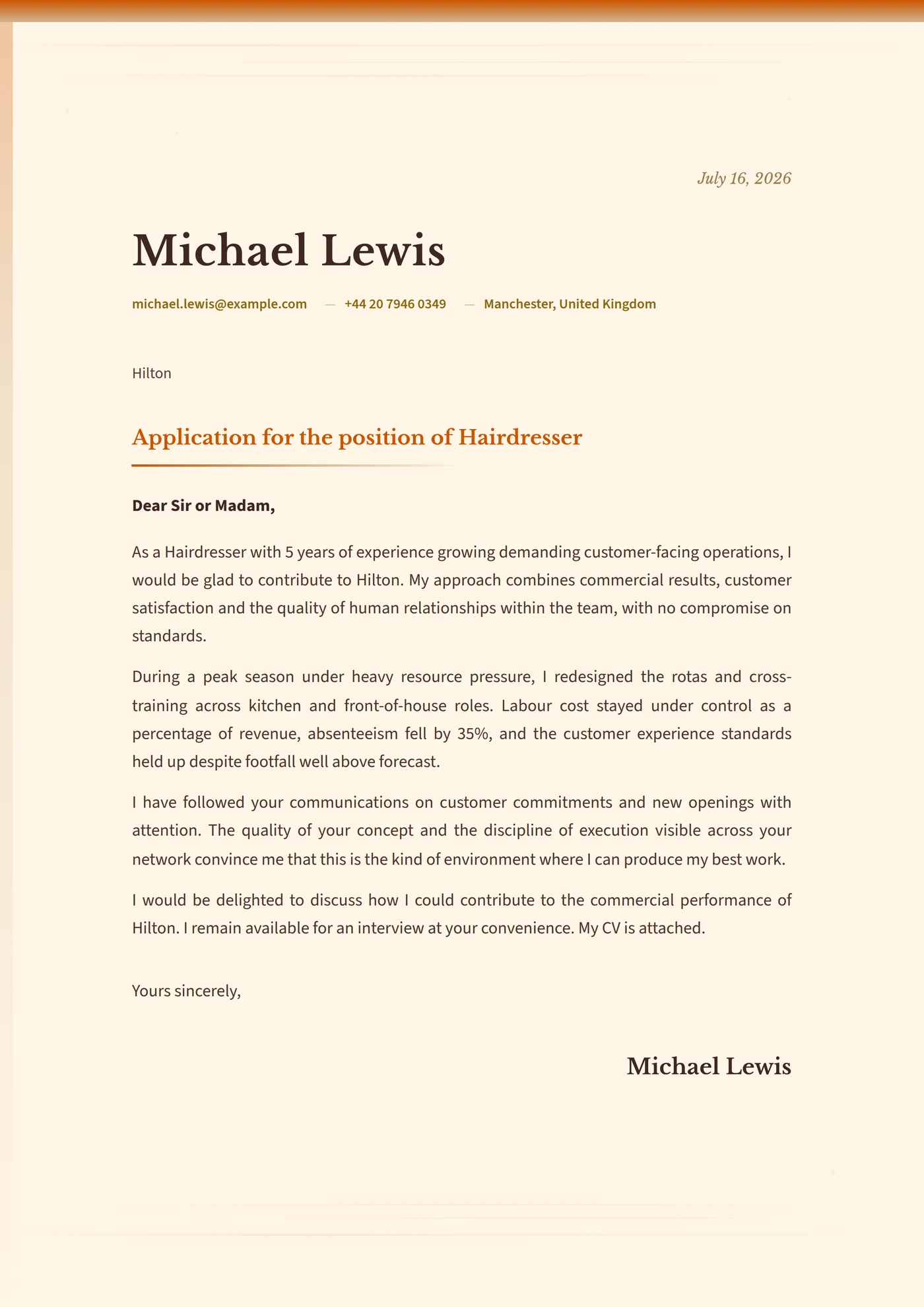
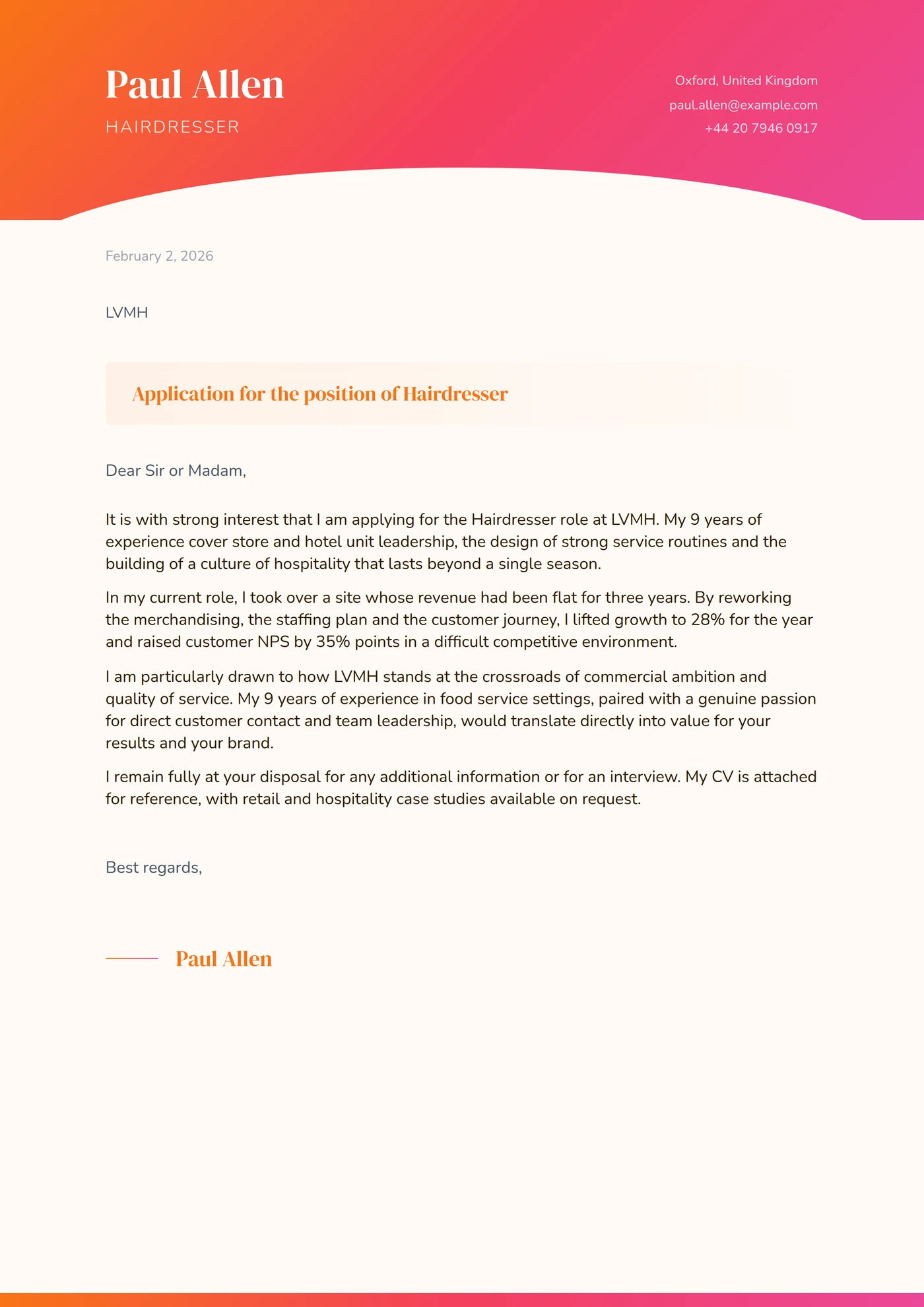
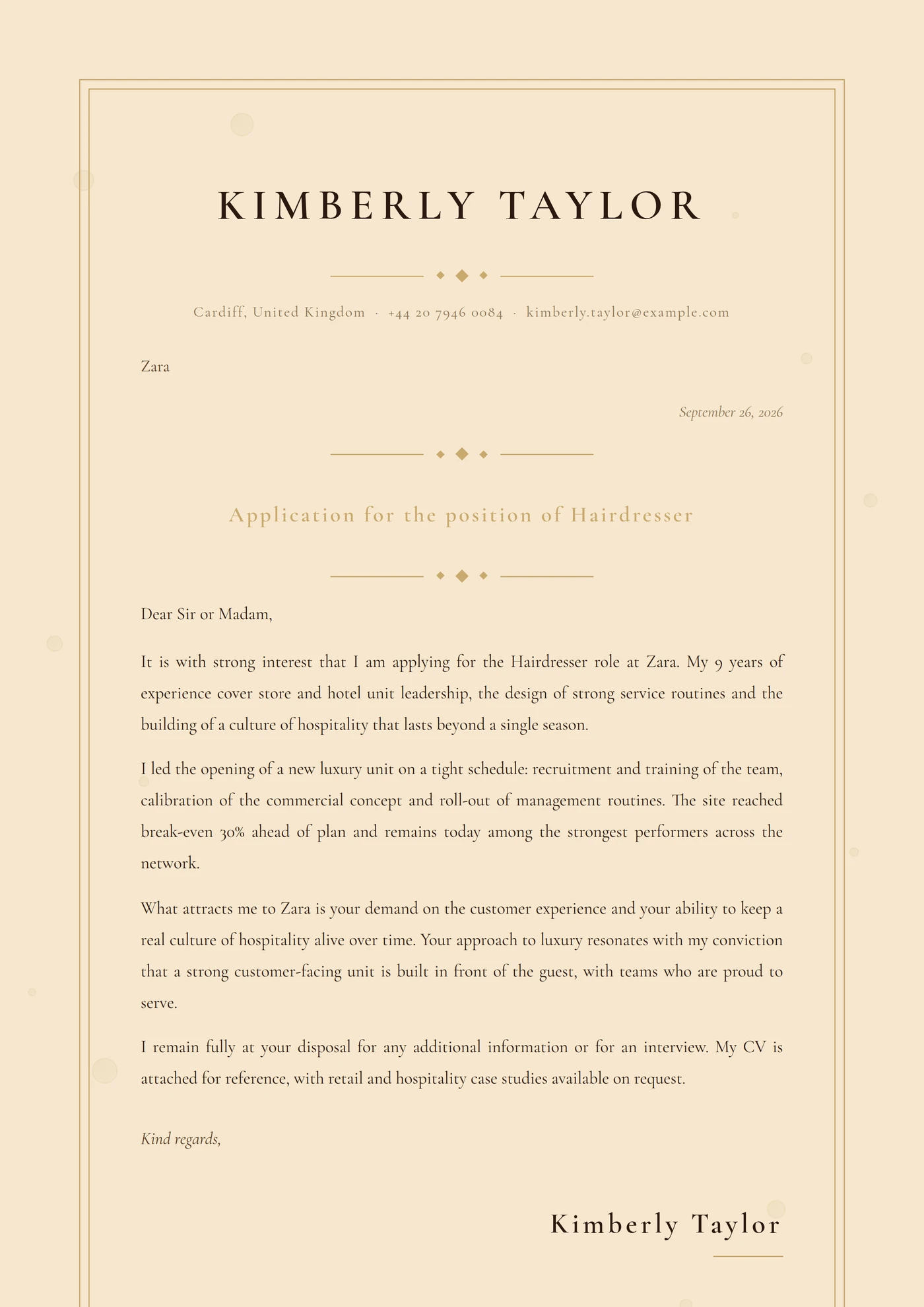
Three templates selected for this role, from junior to senior level. Tap a template to discover its full design and use it in your document.
How to Write a Hairdresser Cover Letter
Open your Hairdresser cover letter with a specific hook — mention the salon by name, a service specialty you share with their brand, or a mutual connection, rather than a generic greeting like To Whom It May Concern. Address the hiring manager or salon owner by name whenever possible; a quick look at the salon website or social media usually reveals this. Avoid starting with I am writing to apply for the position of Hairdresser, as it wastes the first line on something the subject line already states. Instead, lead with a compelling detail: your years behind the chair, a signature technique like balayage or precision cutting, or your passion for helping clients feel confident. This immediately signals value and makes the reader want to continue.
The body should run two to three paragraphs. The first paragraph should connect your technical expertise — cutting, coloring, styling, or chemical treatments — to the specific needs mentioned in the job posting, showing you read it carefully. The second paragraph should highlight concrete achievements such as building a loyal client base, growing retail product sales, or receiving positive reviews, using numbers wherever possible to quantify your impact. A closing body paragraph should address cultural fit: why this particular salon appeals to you, whether it is their clientele, brand values, continuing education opportunities, or team environment. Balance hard skills like color correction or extensions with soft skills like communication and consultation ability, since client trust is central to hairdressing success and hiring managers look for both artistry and interpersonal warmth.
Close with a clear call to action, such as inviting the hiring manager to review your portfolio or schedule a trial service or interview, and reaffirm your enthusiasm for joining their team. Sign off professionally with Sincerely or Best regards, followed by your full name and contact details, and avoid vague endings like I hope to hear from you soon without a stronger push for next steps. Do not apologize for lack of experience or undersell your skills in the closing; instead, end on a confident, warm note that mirrors the welcoming tone clients expect in a salon.
The tone should be warm, personable, and confident, reflecting the hospitality-driven nature of hairdressing while remaining professionally polished. Avoid overly casual slang, but do not be stiff either — hiring managers want to sense the friendly, approachable demeanor that makes clients comfortable in the chair. Use active, descriptive language around your craft, such as precision, consultation, and client satisfaction, which signals professionalism and genuine passion for the trade rather than treating it as just a job.
Skills to Mention in Your Hairdresser Cover Letter
Common Mistakes
A generic Hairdresser cover letter that could apply to any salon signals a lack of genuine interest and is easy for hiring managers to spot. Fix this by naming the salon, referencing its specific style or clientele, and tying your specific technical strengths to what that salon actually offers.
Keep the letter to under one page, ideally three to four tight paragraphs, since salon owners and managers are busy and want a quick sense of your fit. Cut repeated resume content and instead focus on the one or two strongest achievements or specialties that make you stand out.
Simply listing duties like performed haircuts and color services without results fails to differentiate you from other candidates. Reframe duties into achievements, such as grew a loyal client base of over 150 regulars or increased retail sales by 20% through personalized product recommendations.
Avoid overly decorative fonts, excessive colors, or cluttered layouts that distract from the content; stick to a clean, readable format submitted as a PDF unless the application specifies otherwise. Also double-check that contact information and the salon's correct name are accurate, since errors here suggest carelessness in a detail-oriented profession.
Frequently Asked Questions
Yes, even in a hands-on trade like hairdressing, a cover letter helps you stand out by showing personality, client-care philosophy, and genuine interest in that specific salon. It complements your resume and portfolio by explaining the story behind your skills rather than just listing them.
It should be concise, ideally under one page with three to four short paragraphs. Hiring managers want a quick, compelling read, not a lengthy restatement of your resume.
Absolutely — tailoring each letter to the specific salon's brand, clientele, and services shows genuine interest and effort. A customized letter referencing the salon by name performs far better than a copy-paste version.
In the US and UK, a cover letter is often appreciated though not always mandatory for hourly salon positions, while it can strengthen your application for management or boutique salon roles. In many EU countries, a short motivation letter alongside your CV is more commonly expected, especially for apprenticeships or formal salon chains.
AI tools can help structure your letter and suggest phrasing, but you should always personalize the final draft with specific salon details, your own achievements, and authentic voice. Avoid submitting a letter that sounds generic or robotic, as salon owners value personal connection.
Submit your cover letter as a clean PDF file to preserve formatting, unless the salon specifically requests another format like a Word document. Use a simple, legible font and keep the layout professional rather than overly decorative.
Related Job Titles
Explore more about