
When You Need a Cover Letter for Kitchen Assistant
A cover letter for a Kitchen Assistant role lets you show enthusiasm for the specific kitchen, restaurant, or care facility beyond what a resume lists. It gives space to explain your reliability, food safety awareness, and ability to work fast under pressure, which hiring chefs often value as much as experience. A tailored letter signals you researched the establishment and genuinely want the position, not just any job.
For an internship or entry-level Kitchen Assistant position, the cover letter should emphasize enthusiasm for learning, willingness to follow instructions, and any exposure to food handling, whether through school, family, or volunteer settings. Highlight transferable qualities like punctuality, stamina, and teamwork since formal kitchen experience may be limited. Mention any food hygiene coursework or certifications to show initiative despite being new to the field.
When moving into a Kitchen Assistant role from another field, focus the letter on transferable skills such as multitasking, working under time pressure, following safety procedures, and customer service. Explain briefly why you are drawn to kitchen work and connect past responsibilities, like handling physical tasks or managing fast-paced environments, to the demands of a kitchen. Avoid dwelling on the career switch itself and instead center the letter on your readiness and genuine interest in food service.
An internal promotion cover letter for Kitchen Assistant should use a confident, familiar tone that references your tenure and specific contributions at the establishment. Highlight concrete examples like improved prep efficiency, mentoring new staff, or consistent reliability during busy shifts. Keep it concise since the hiring manager already knows your work, and focus on why you are ready for expanded responsibilities.
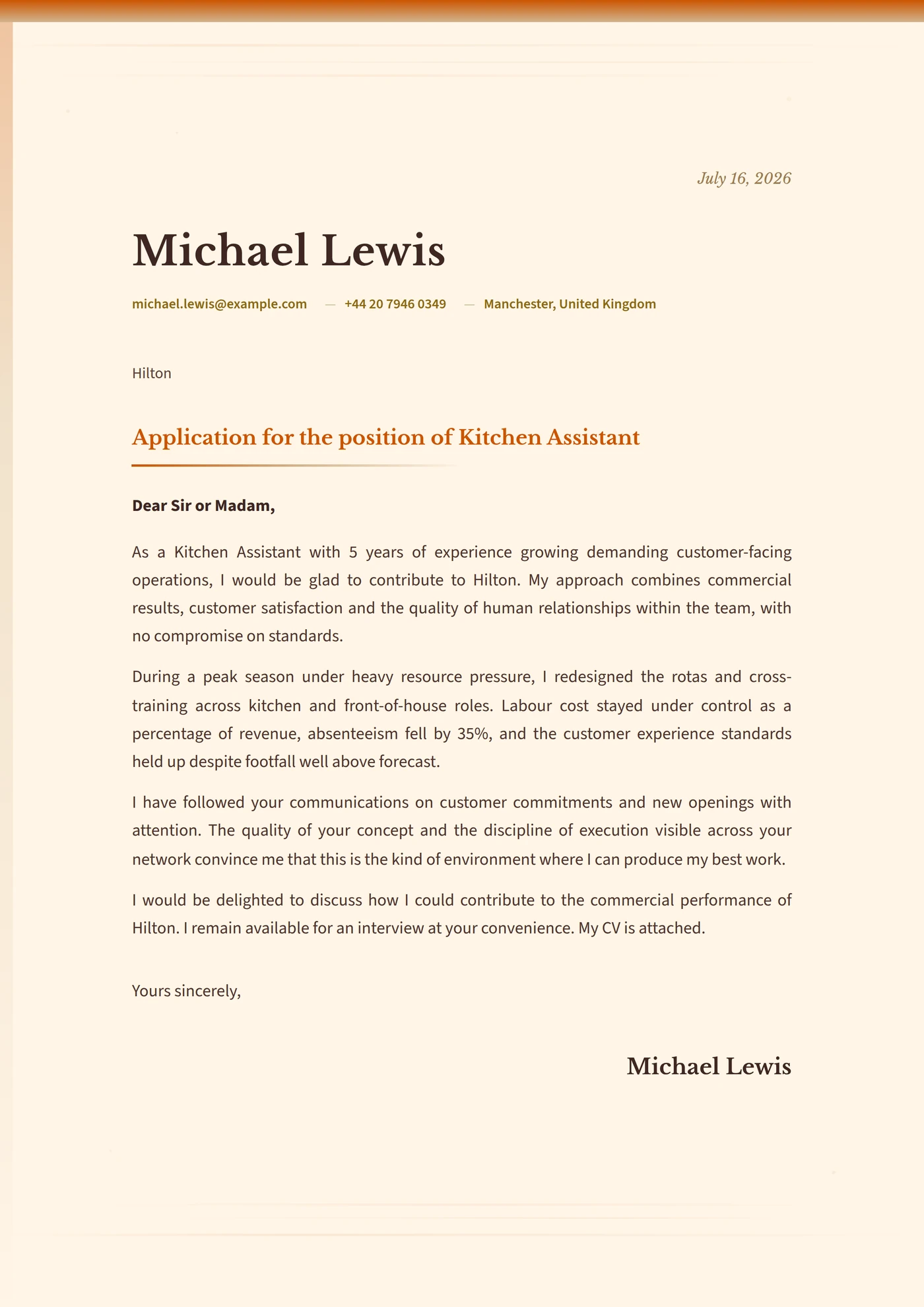
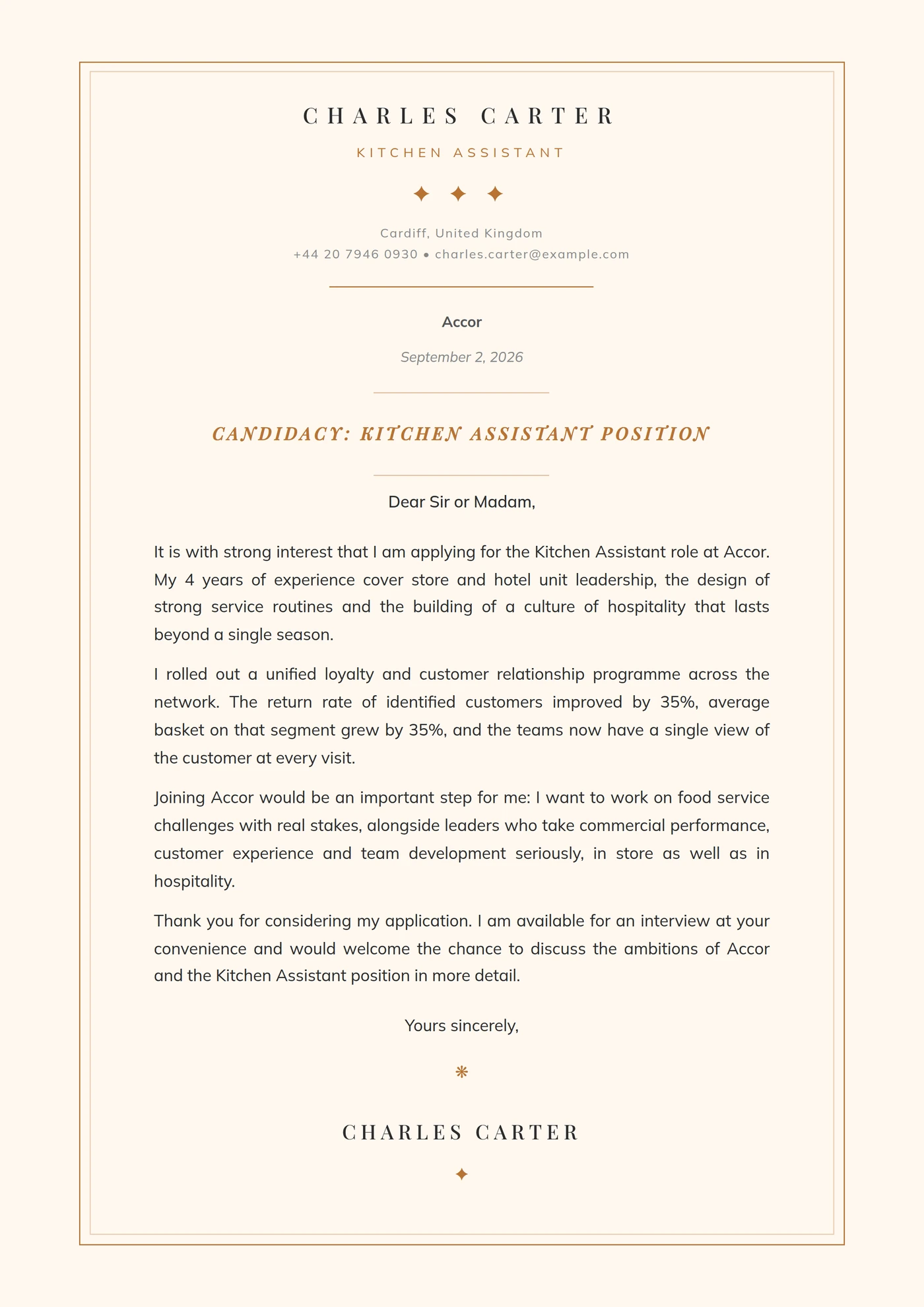
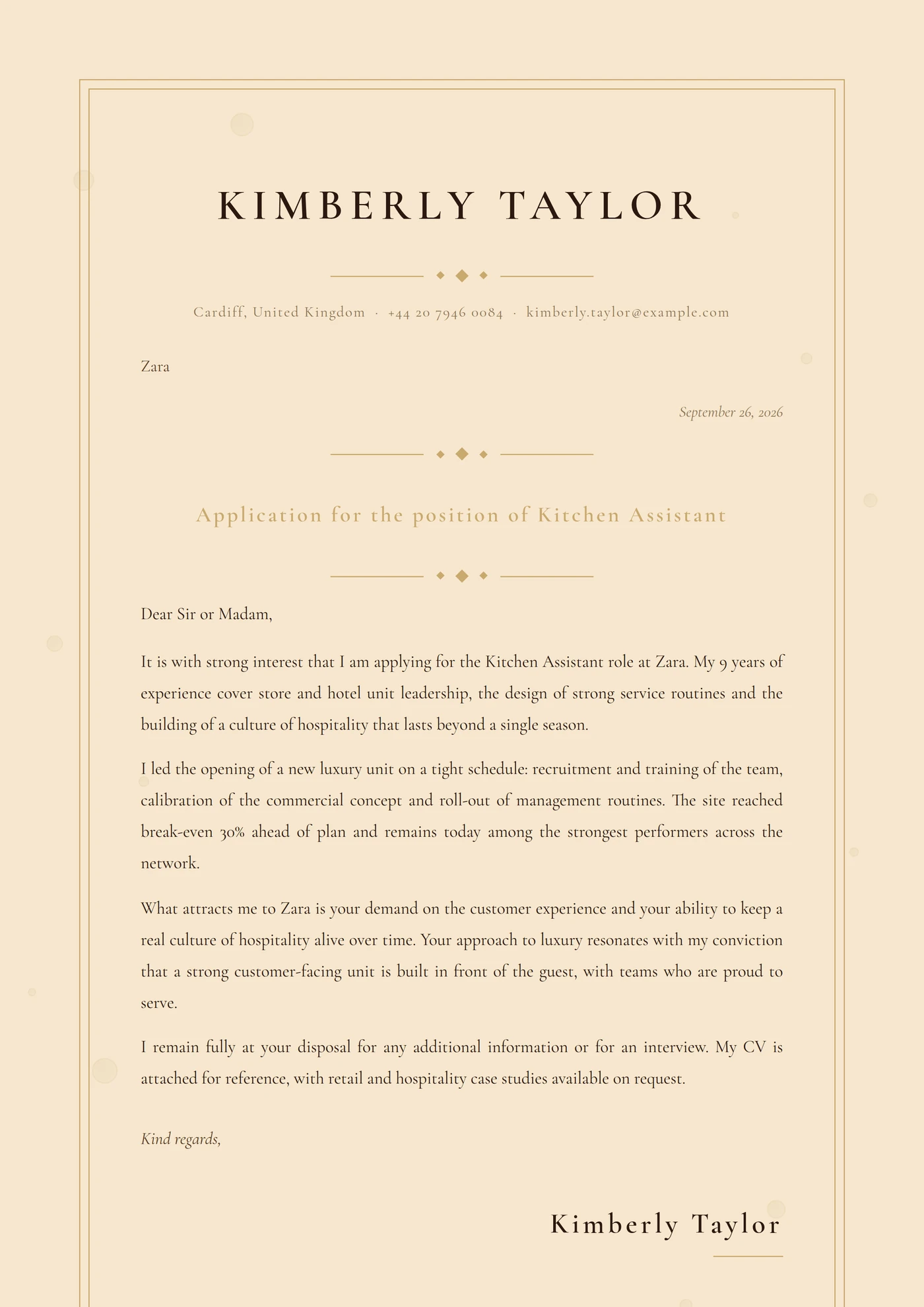
Recommended templates for Kitchen Assistant
Three templates selected for this role, from junior to senior level. Tap a template to discover its full design and use it in your document.
How to Write a Kitchen Assistant Cover Letter
Open with a direct statement of the role you are applying for and where you found it, followed by a sentence that conveys genuine interest in that specific kitchen or restaurant. Avoid generic openers like 'I am writing to apply for the position' with no context; instead, mention something specific, such as the restaurant's cuisine, reputation, or values, to show you did your homework. If possible, address the letter to the head chef or hiring manager by name rather than 'To Whom It May Concern'.
Keep the body to two or three short paragraphs. The first should cover your relevant experience or training, such as food prep, sanitation, or line support, with a concrete example of a task you handled well. The second paragraph should highlight soft skills like working calmly under pressure, following instructions precisely, and being a dependable team player, since kitchens run on trust and speed. If you have measurable results, such as reducing waste or consistently meeting prep deadlines, include them, but always balance skills with a clear statement of motivation for wanting this specific job.
Close with a brief, confident call to action, such as expressing eagerness to discuss how you can contribute during an interview, and mention your availability to start. Thank the reader for their time and sign off with a professional closing like 'Sincerely' or 'Best regards' followed by your name. Avoid overly casual sign-offs or desperate language like 'I really need this job'.
The tone should be polite, professional, and straightforward, reflecting the fast-paced and no-nonsense culture of most kitchens. Avoid overly flowery language or long sentences; short, clear statements demonstrate the same efficiency valued on the job. Showing respect for hierarchy, such as acknowledging the head chef's role, signals professionalism without being stiff or overly formal.
Skills to Mention in Your Kitchen Assistant Cover Letter
Common Mistakes
A generic Kitchen Assistant cover letter that could apply to any restaurant signals a lack of genuine interest and effort. Fix this by naming the specific establishment, referencing its cuisine or reputation, and explaining why you want to work there rather than elsewhere.
Cover letters longer than one page lose the reader's attention, especially for a role where hiring managers review applications quickly between shifts. Keep it to three to four short paragraphs, cutting any repetition of the resume and focusing only on the most relevant points.
Simply listing duties like 'washed dishes' or 'prepped vegetables' without context fails to show impact. Reframe these into brief achievements, such as maintaining a clean station that passed every health inspection or consistently prepping ingredients ahead of schedule during busy shifts.
Avoid unusual fonts, excessive colors, or dense blocks of text that are hard to skim quickly. Submit the letter as a PDF unless otherwise instructed, use a standard business letter format, and double-check that any email subject line clearly states the position title.
Frequently Asked Questions
While some kitchens accept resume-only applications, a brief cover letter helps you stand out by showing enthusiasm and reliability, qualities hard to convey on a resume alone. Even a short, well-written letter can make the difference when a manager is comparing similar candidates.
Aim for three to four short paragraphs that fit on half to a full page. Hiring managers in fast-paced kitchens prefer concise, easy-to-skim letters over lengthy ones.
Yes, tailoring each letter to mention the specific restaurant, cuisine style, or values shows genuine interest and effort. Even small changes, like referencing the establishment's name and type of food served, make a noticeable difference to hiring managers.
In the US and UK, a cover letter is often optional for entry-level kitchen roles but still appreciated when provided. In many EU countries, a short motivational letter is more commonly expected as part of a complete application, so including one is generally a safe choice across all regions.
AI tools can help structure your letter and suggest wording, but you should always personalize the content with specific details about the restaurant and your own experience. Avoid submitting an unedited AI draft, as hiring managers can often tell when a letter lacks genuine personal voice.
Submit your letter as a PDF file to preserve formatting, unless the employer specifically requests a different format like .docx or plain text in an email body. Use a standard business letter layout with clear paragraphs and a professional, readable font.
Related Job Titles
Explore more about