
When You Need a Cover Letter for Pastry Chef
A cover letter lets a Pastry Chef candidate show personality, creative vision, and passion for the craft that a resume cannot convey. It is the place to connect your signature techniques and plating style to the specific kitchen, bakery, or restaurant concept you are applying to, showing the hiring chef you understand their brand.
An internship cover letter should emphasize enthusiasm, formal culinary training, and any hands-on experience from school kitchens, competitions, or stages, since professional experience is limited. Highlight willingness to learn, precision with basic techniques like tempering chocolate or laminating dough, and a genuine passion for pastry arts.
When moving into pastry from another field, frame transferable skills such as attention to detail, time management under pressure, and hands-on craftsmanship from prior roles, then pair them with any culinary coursework, self-taught baking, or stages completed. Explain clearly why you are pivoting to pastry and what concrete steps you have taken to build technical competence.
For an internal promotion to a lead or head Pastry Chef role, the tone should be confident and collaborative, highlighting menu development, mentorship of junior staff, and consistency in execution you have already demonstrated in the kitchen. Reference specific contributions like reduced waste, new seasonal menus, or improved plating standards that justify the next step.
Recommended templates for Pastry Chef
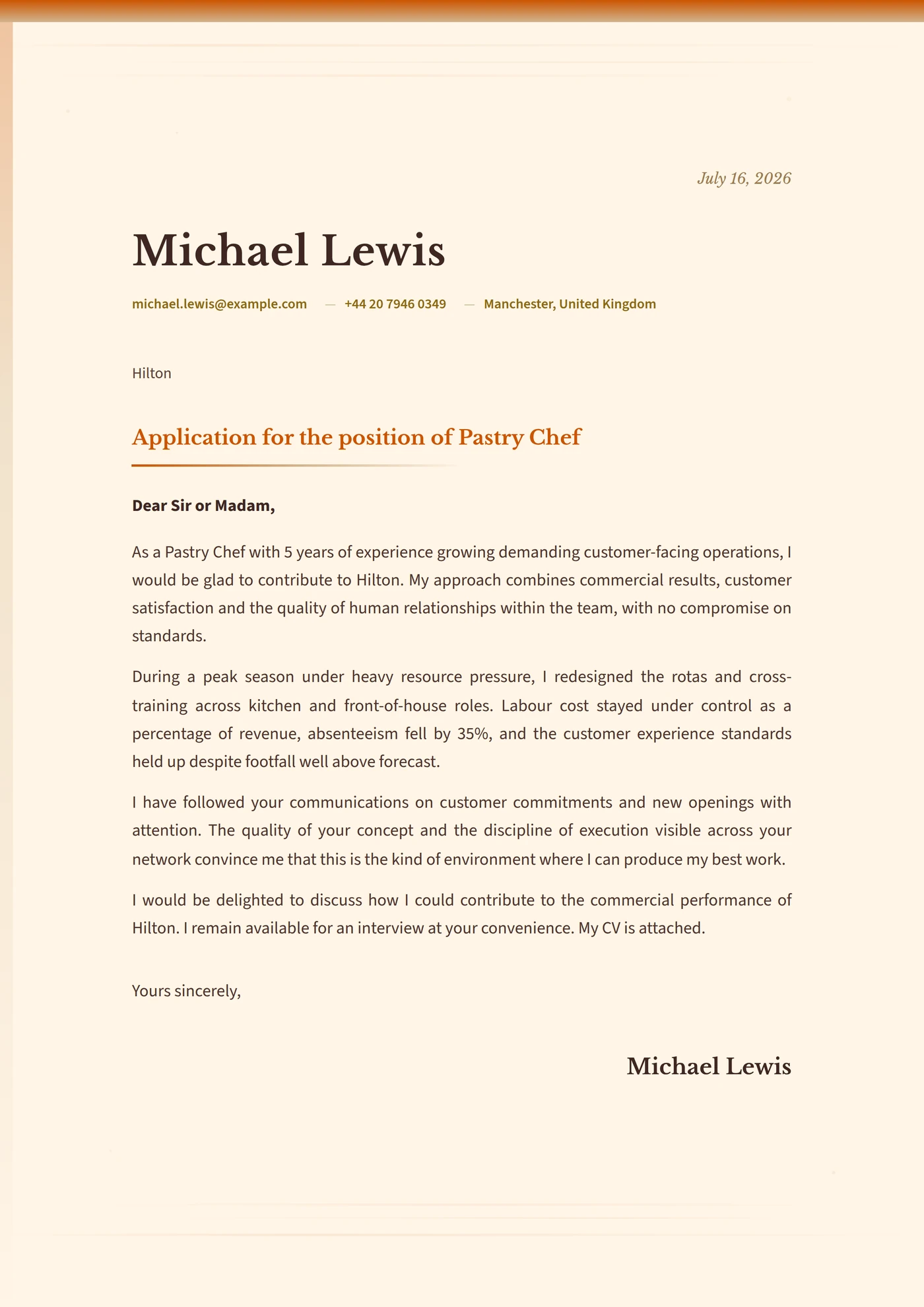
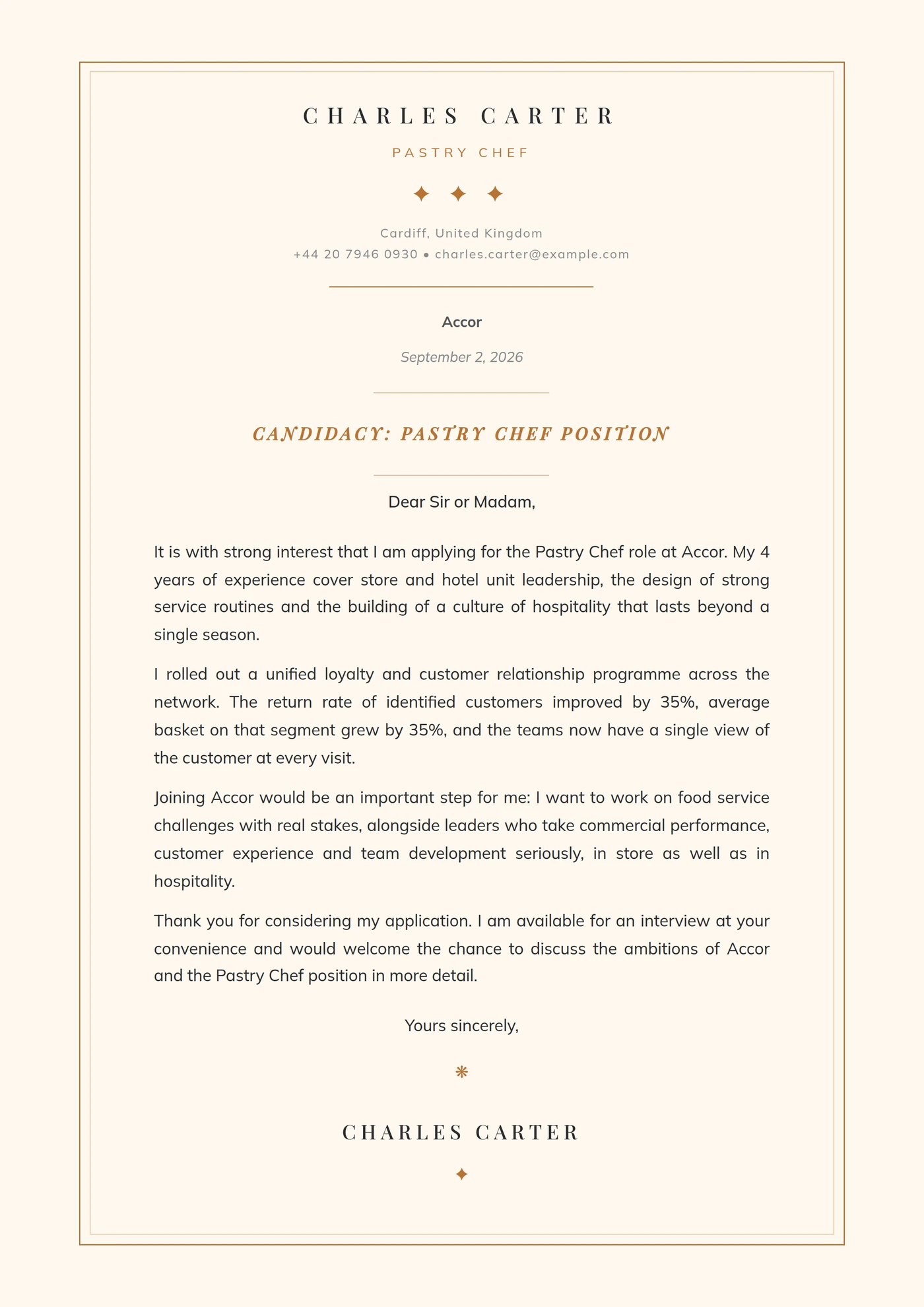
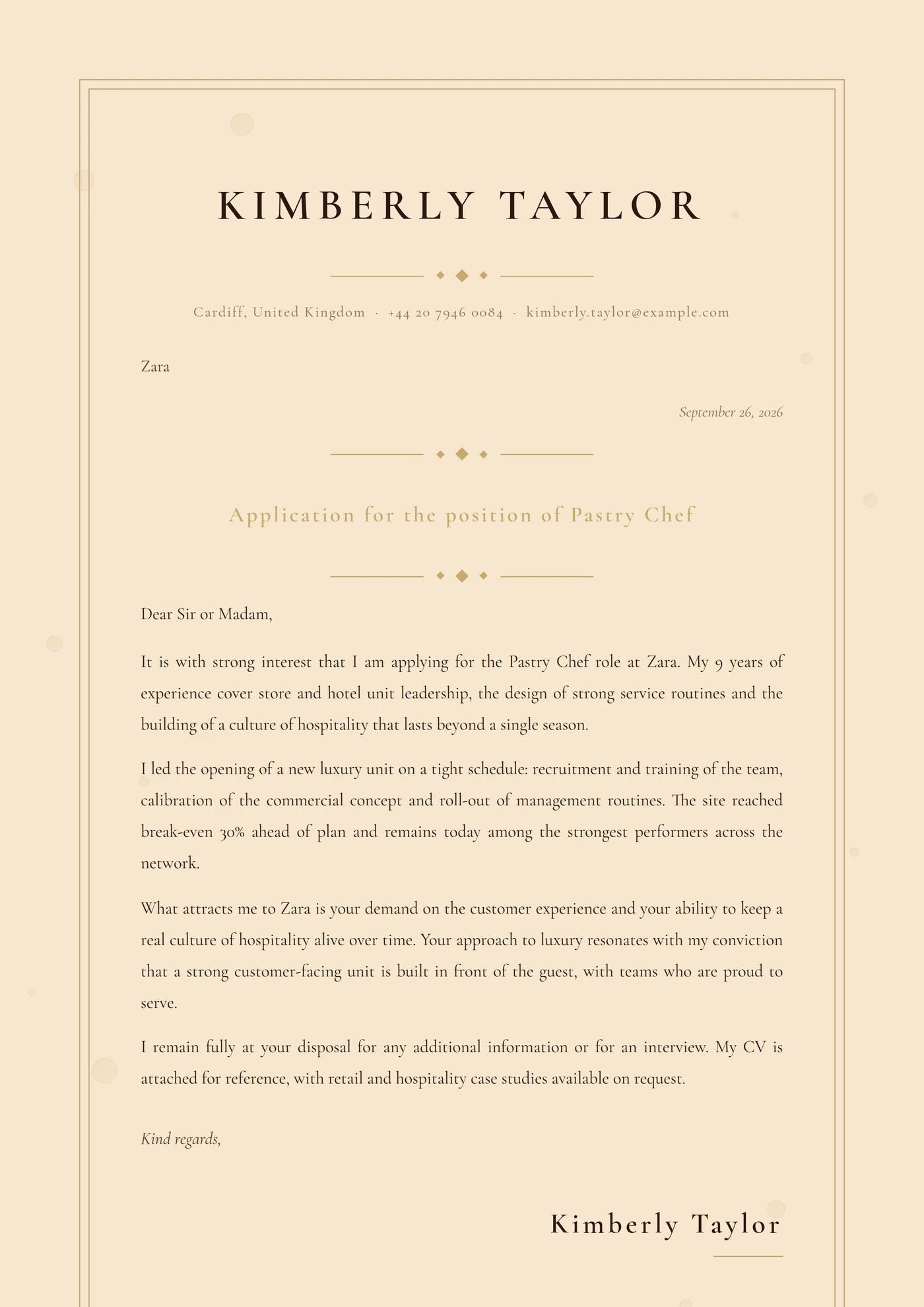
Three templates selected for this role, from junior to senior level. Tap a template to discover its full design and use it in your document.
How to Write a Pastry Chef Cover Letter
Open with a strong, specific first line that names the restaurant, bakery, or hotel and references something distinctive about its pastry program, such as a seasonal menu philosophy or signature dessert style. Avoid generic openers like 'I am writing to apply for the Pastry Chef position' — instead, lead with a brief hook about your culinary identity or a relevant accomplishment. Whenever possible, address the letter to the head chef, executive pastry chef, or hiring manager by name rather than 'To Whom It May Concern.' This shows initiative and that you researched the team you want to join, which matters in a craft-driven field like pastry.
The body should typically span two to three paragraphs. The first should connect your training, certifications, and technical strengths — such as viennoiserie, sugar work, or chocolate tempering — directly to the employer's needs. The second should highlight one or two quantifiable achievements, like reducing ingredient waste by a percentage, creating a dessert menu that boosted sales, or managing a pastry station during high-volume service. Balance technical skill with motivation: explain not just what you can do, but why this particular kitchen or brand excites you. If you have leadership experience, dedicate a line to mentoring junior cooks or coordinating with the executive chef on menu planning, since this signals readiness for greater responsibility.
Close with a confident call to action, expressing eagerness to discuss how your pastry skills align with the team's needs in an interview or trial shift (stage). Reiterate genuine interest in the specific establishment rather than a generic 'I look forward to hearing from you.' Sign off professionally with 'Sincerely' or 'Best regards,' followed by your full name. Avoid overly casual sign-offs or apologetic language about limited experience.
The tone should be professional yet passionate, reflecting the creativity and precision central to pastry work without becoming overly casual. Use confident, active language around technique and craftsmanship, such as 'developed,' 'perfected,' or 'executed,' rather than passive phrasing. Industry readers expect concise, well-structured writing free of clichés; show professionalism through clear organization and specific culinary vocabulary rather than generic enthusiasm alone.
Skills to Mention in Your Pastry Chef Cover Letter
Common Mistakes
A generic cover letter that could apply to any kitchen signals a lack of genuine interest in the specific role. Fix this by naming the establishment, referencing its menu style, and tying your pastry specialties directly to what they offer guests.
Cover letters longer than one page dilute the impact of your strongest achievements and risk losing the reader's attention. Keep it to three to four concise paragraphs, cutting repetitive resume details and focusing only on the most relevant skills and accomplishments.
Simply listing duties like 'prepared desserts daily' fails to differentiate you from other candidates with similar experience. Reframe duties into achievements by adding metrics, such as 'developed a seasonal dessert line that increased dessert sales by 20%.'
Avoid decorative fonts, excessive colors, or inconsistent spacing that can distract from your content or cause issues with ATS parsing. Submit as a PDF unless otherwise specified, use a professional font, and keep formatting clean and consistent with your resume.
Frequently Asked Questions
Yes, a cover letter is highly recommended even when not explicitly required, as it lets you demonstrate passion for pastry arts and connect your style to the employer's brand. In a craft-driven field like pastry, hiring managers often value this personal context alongside your resume and portfolio.
Aim for one page, roughly three to four paragraphs, covering your introduction, key skills and achievements, and a closing call to action. Hiring chefs typically review many applications quickly, so concise, impactful writing performs better than a lengthy narrative.
Absolutely — tailoring each letter to the specific kitchen, menu style, and role shows genuine interest and research. Reusing a generic letter is one of the fastest ways to get overlooked, even with strong qualifications.
In the US and UK, a tailored cover letter is common practice and can strengthen an application, though some casual kitchens may not require it. In many EU countries, a cover letter (sometimes called a motivation letter) is often expected as a standard part of the application alongside the CV, so it is safer to always include one.
AI tools can be useful for structuring your letter or overcoming writer's block, but the final content should reflect your authentic voice and specific experiences. Always personalize AI-generated drafts with real achievements and kitchen-specific details to avoid sounding generic.
Submit your cover letter as a PDF to preserve formatting, unless the employer specifies another file type like .docx. Use a clean, professional layout with clear paragraphs, consistent fonts, and no excessive graphics that could distract from your message.
Related Job Titles
Explore more about