Cook Resume Example & Guide

Learn how to write a standout Cook resume with expert tips, sample bullet points, and ATS optimization advice.

We currently have 64 Cook job postings in our database. Apply now — it's free

A Cook prepares food items according to recipes and standards while maintaining a clean, safe, and efficient kitchen. Employers look for candidates who demonstrate food safety knowledge, speed under pressure, consistency in plating and taste, and the ability to work well within a team during high-volume service. Strong candidates highlight measurable achievements like reduced ticket times, cost control, or menu contributions rather than just listing duties. Most Cook roles require 0-5 years of experience, with entry-level positions focusing on basic prep and line work and senior roles emphasizing supervision, inventory, and menu development. Salaries vary widely by region and establishment type, typically ranging from $28,000 to $45,000 annually for line cooks, with senior cooks and specialists earning more.

What Makes a Great Cook Resume

A strong Cook resume is clean, easy to scan, and organized around concrete, measurable contributions rather than vague duty statements. Recruiters and kitchen managers scan resumes quickly during busy hiring periods, so a reverse-chronological format with clear section headers, bullet points, and consistent formatting works best. Emphasize speed, volume handled (covers per shift), food safety compliance, and any specialty stations or cuisines mastered. Content should prioritize hands-on kitchen experience, certifications like ServSafe, and quantifiable results such as reduced food waste, improved prep times, or successful menu launches. Tone should be direct and action-oriented, using strong verbs like prepared, plated, managed, and trained. Avoid generic filler; instead show progression from basic prep roles to more complex responsibilities like inventory management or line leadership. For senior-level Cooks or those aspiring to Sous Chef or Kitchen Manager roles, the resume should also reflect leadership, cost control, and mentorship of junior staff, positioning the candidate as ready for expanded responsibility.

Key Skills Needed

Knife skillsFood safety and sanitationRecipe execution and consistencyMenu costing basicsSpeed and multitasking under pressureGrill, saute, and fry station proficiencyInventory and stock rotationPlating and presentationTeam communicationTime managementAdaptability to high-volume serviceBasic culinary mathEquipment maintenanceAttention to detail

Typical Experience Level

Entry-level Cooks typically have 0-2 years of experience, often starting as prep cooks or line cooks in casual dining before moving to more demanding stations. Mid-level Cooks with 2-5 years of experience usually handle multiple stations independently, train newer staff, and may assist with ordering or inventory. Senior Cooks or Lead Line Cooks with 5+ years of experience often oversee shift operations, contribute to menu development, and mentor junior cooks, positioning themselves for advancement to Sous Chef roles. Recruiters expect entry-level resumes to emphasize training, certifications, and willingness to learn, while senior resumes should highlight leadership, cost control, and consistent quality across high-volume services.

ATS Keywords for This Role

Line cookPrep cookFood safetyServSafe certifiedKnife skillsMenu executionInventory managementFood cost controlHigh-volume kitchenPlating techniquesGrill stationSaute stationKitchen sanitationCulinary teamFood preparationRecipe developmentPortion controlKitchen equipment maintenanceCustomer satisfactionFast-paced environment

Recommended templates for Cook

Three templates selected for this role, from junior to senior level. Tap a template to discover its full design and use it in your document.
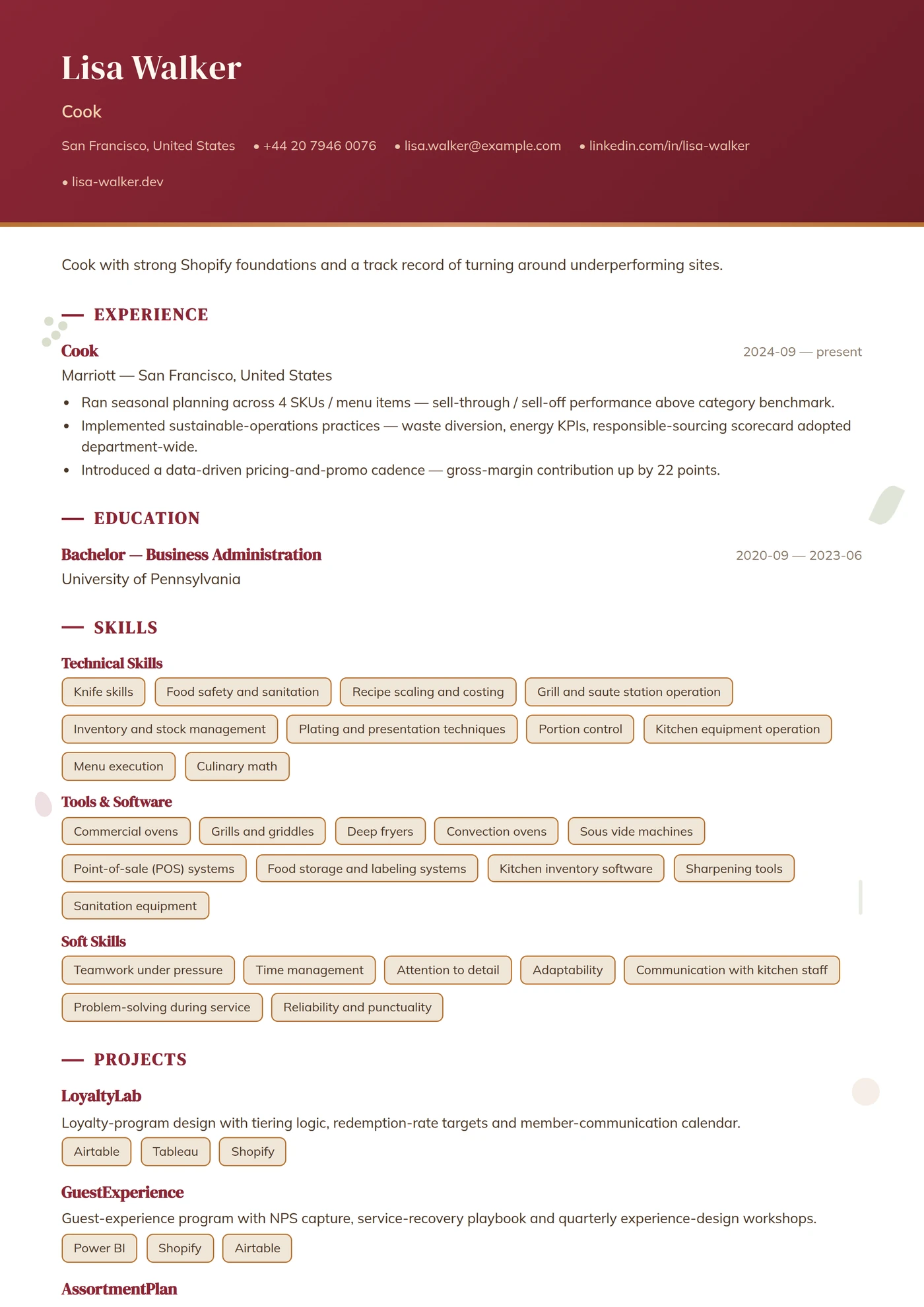
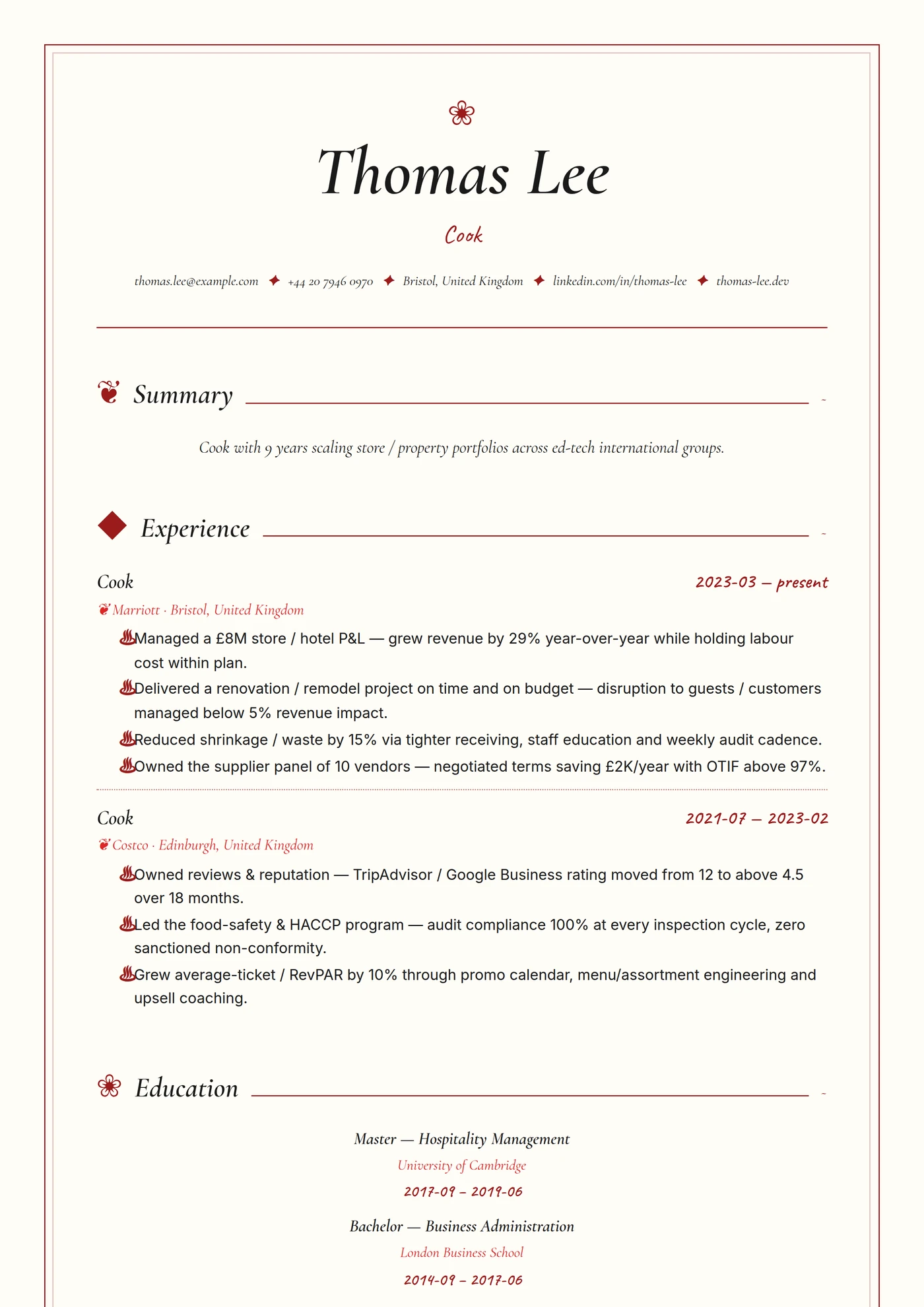
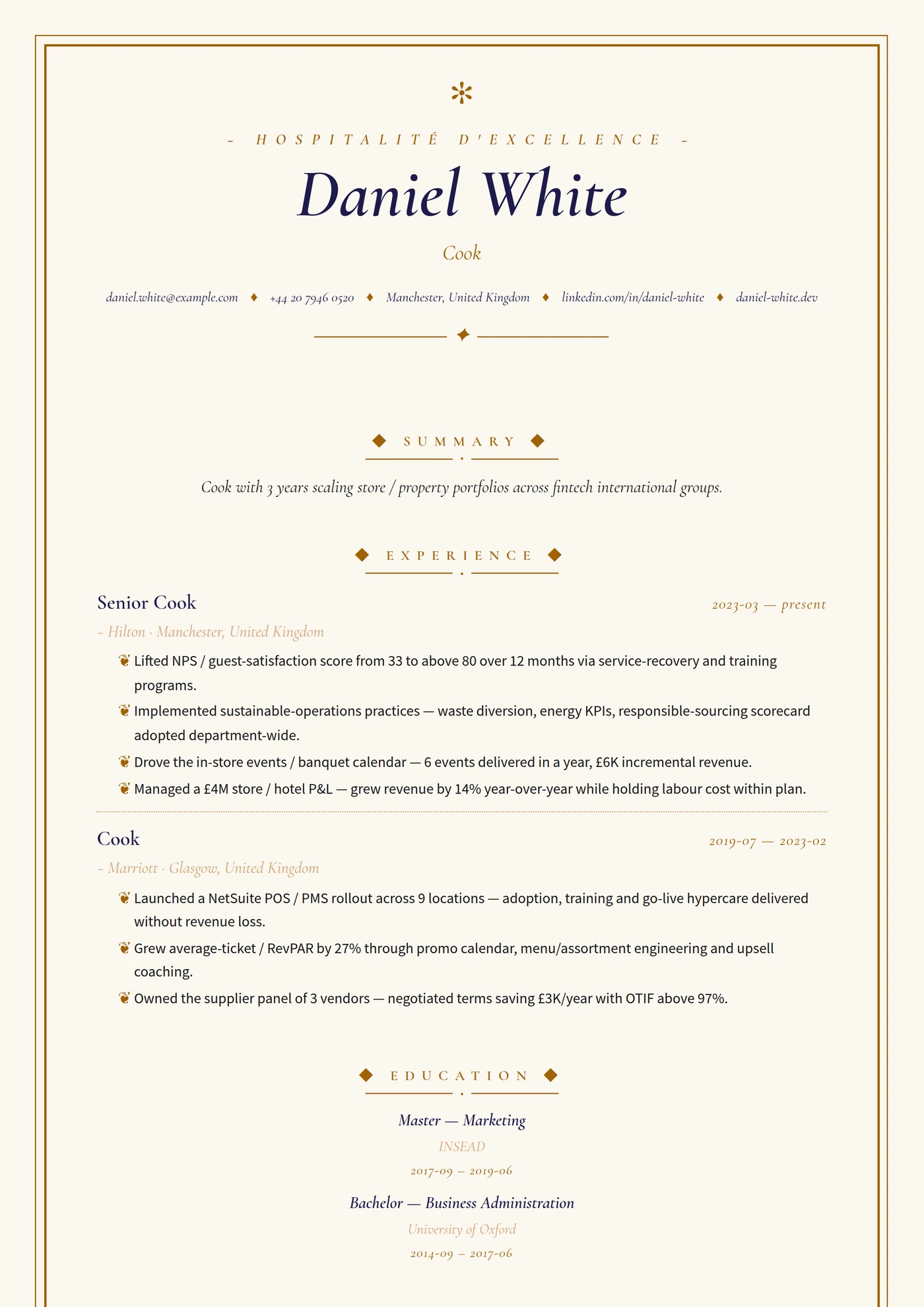
Junior
Profession — Restaurant Service — Junior

Profession — Restaurant Service

industry

This industry-specific template offers a clean, ATS-friendly layout tailored to food service roles, making it easy for junior Cooks to highlight basic skills and certifications without unnecessary design distractions.

Learn more about this template
Mid-level
Industry — Culinary Chef — Mid-level

Industry — Culinary Chef

industry

Designed for culinary professionals, this template balances visual appeal with structured sections for station experience, certifications, and measurable kitchen achievements, ideal for a mid-level Cook seeking advancement.

Learn more about this template
Senior
Industry — Hospitality — Senior

Industry — Hospitality

industry

This premium hospitality-focused template supports a more executive tone, allowing senior Cooks to showcase leadership, menu development, and cost-control accomplishments suited for Sous Chef or Kitchen Manager transitions.

Learn more about this template

Skills for Cook

Hard Skills

Knife skillsFood safety and sanitationRecipe scaling and costingGrill and saute station operationInventory and stock managementPlating and presentation techniquesPortion controlKitchen equipment operationMenu executionCulinary math

Soft Skills

Teamwork under pressureTime managementAttention to detailAdaptabilityCommunication with kitchen staffProblem-solving during serviceReliability and punctuality

Tools & Software

Commercial ovensGrills and griddlesDeep fryersConvection ovensSous vide machinesPoint-of-sale (POS) systemsFood storage and labeling systemsKitchen inventory softwareSharpening toolsSanitation equipment

ATS Keywords

ServSafe certifiedLine cook experienceFood safety complianceHigh-volume serviceMenu preparationKitchen operationsCost controlInventory trackingFood handling certificationTeam collaborationFast-paced kitchen environmentRecipe consistencySanitation standards

Writing Tips for Cook

Best Format to Use

The reverse-chronological format works best for most Cook resumes since it clearly shows career progression through kitchen roles and stations. This format is preferred by hiring managers and ATS systems alike because it is easy to parse and highlights recent, relevant experience first. A hybrid format can work for career changers or those with limited formal kitchen experience, allowing them to lead with transferable skills like food safety training or customer service before detailing work history. However, most kitchen employers expect straightforward, chronological listings of roles and responsibilities.

Common Mistakes

Listing duties instead of achievements — describe results like reduced prep time or waste reduction rather than just tasks performed.
Omitting food safety certifications such as ServSafe, which many employers require or prefer.
Using overly creative formatting that confuses ATS parsing software.
Failing to specify stations worked (grill, saute, fry) which recruiters often search for specifically.
Not quantifying volume handled, such as covers per shift or team size managed.
Including irrelevant non-culinary experience without connecting it to transferable skills.
Neglecting to update skills section with current kitchen technology or POS systems used.

How to Pass ATS

Mirror keywords from the job posting such as ‘line cook’ or ‘food safety’ directly in your resume.
Use standard section headers like Experience, Skills, and Certifications to ensure proper ATS parsing.
Avoid tables, graphics, or columns that can confuse automated parsing systems.
List certifications like ServSafe or Food Handler Certification clearly in a dedicated section.
Save your resume as a .docx or PDF file, as specified by the employer’s application system.
Include both full terms and common abbreviations, such as ‘Point-of-Sale (POS) systems’.
Quantify achievements with numbers, such as ‘prepared 150+ meals per shift’ to trigger keyword matches.

How to Stand Out

Quantify every achievement, such as reduced food waste by 15% or improved ticket times by 20%.
Highlight specialty skills like butchery, baking, or specific cuisines to differentiate yourself.
Showcase leadership experience, even informal mentorship of newer cooks.
Include relevant certifications like ServSafe or allergen awareness training.
Mention experience with high-volume or fine-dining environments to show versatility.
Add a brief summary statement highlighting your culinary specialty and career goals.
Use strong action verbs like prepared, plated, managed, and trained to convey confidence and competence.

Frequently Asked Questions

A Cook resume should typically be one page, especially for entry to mid-level candidates. Senior Cooks with extensive leadership or specialty experience may extend to a second page, but concise, relevant content is always preferred.
Focus on both hard skills like knife skills, food safety, and station expertise, and soft skills like teamwork and adaptability under pressure. Tailor the skills section to match the specific job posting’s requirements.
Use clear, standard formatting with recognizable section headers, and mirror keywords from the job description such as ‘line cook’ or ‘food safety certified’. Avoid complex graphics or tables that can disrupt automated parsing.
Entry-level Cook positions often require little to no prior experience, though basic culinary training or a Food Handler Certification helps. More advanced roles typically expect 2-5 years of hands-on kitchen experience.
While not always required, a brief cover letter can help you stand out by highlighting your passion for cooking and specific achievements not covered in your resume. It’s especially useful when applying to higher-end restaurants or specialized kitchens.
The ServSafe certification is widely recognized and often required, along with basic Food Handler Certification. Additional certifications in allergen awareness or specific cuisines can further strengthen your resume.

Ready to build your resume?

Use our AI Resume Builder to create a tailored, ATS-optimized resume in minutes.

Build my resume

Start for free. No credit card required.