
When You Need a Cover Letter for Cook
A cover letter for a standard Cook application lets you show personality, kitchen work ethic, and cuisine passion that a resume's bullet points can't fully convey. It's your chance to explain why you want to work in that specific kitchen or restaurant concept, and to connect your experience directly to the station or menu style they need covered.
For a Cook internship or entry-level kitchen position, the cover letter should emphasize eagerness to learn, culinary school training, basic knife skills, and any short-term or volunteer kitchen exposure rather than years of paid experience. Highlight reliability, willingness to work early mornings, nights, weekends, and a genuine passion for food to compensate for a thin resume.
When moving into cooking from another field, frame transferable skills like working under pressure, following procedures, multitasking, and customer service, then pair them with any home cooking, catering, or self-taught culinary passion. Be direct about the career shift and show proof of commitment, such as enrolling in culinary courses, staging (working trial shifts) at restaurants, or building a food blog or portfolio.
For an internal promotion to a Cook, Lead Cook, or Sous Chef role, the tone should be confident but respectful of the existing team and management, referencing specific contributions like menu development, mentoring new staff, or consistently maintaining food safety standards. Highlight readiness for more responsibility and familiarity with the kitchen's systems, suppliers, and pace.
Recommended templates for Cook
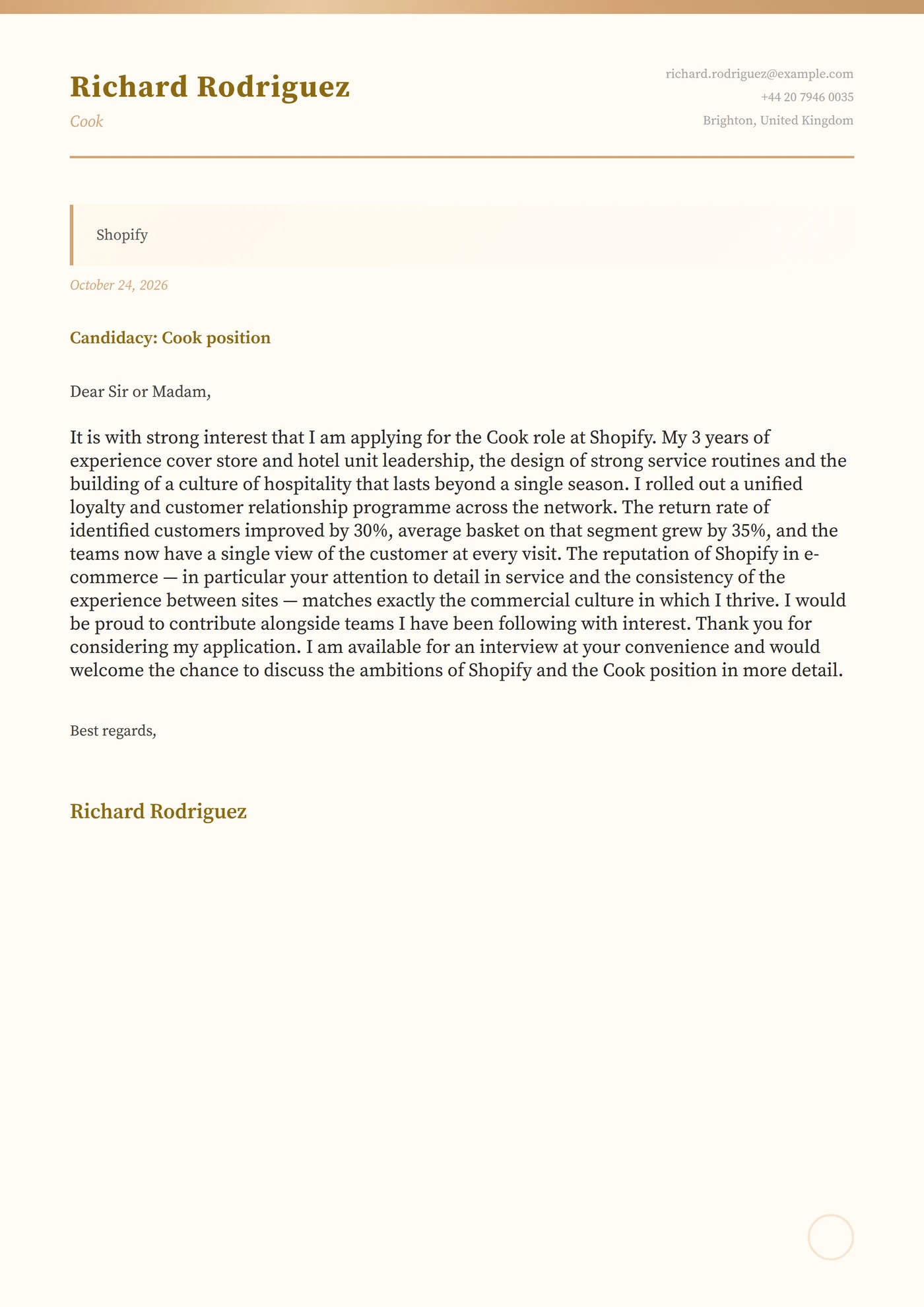
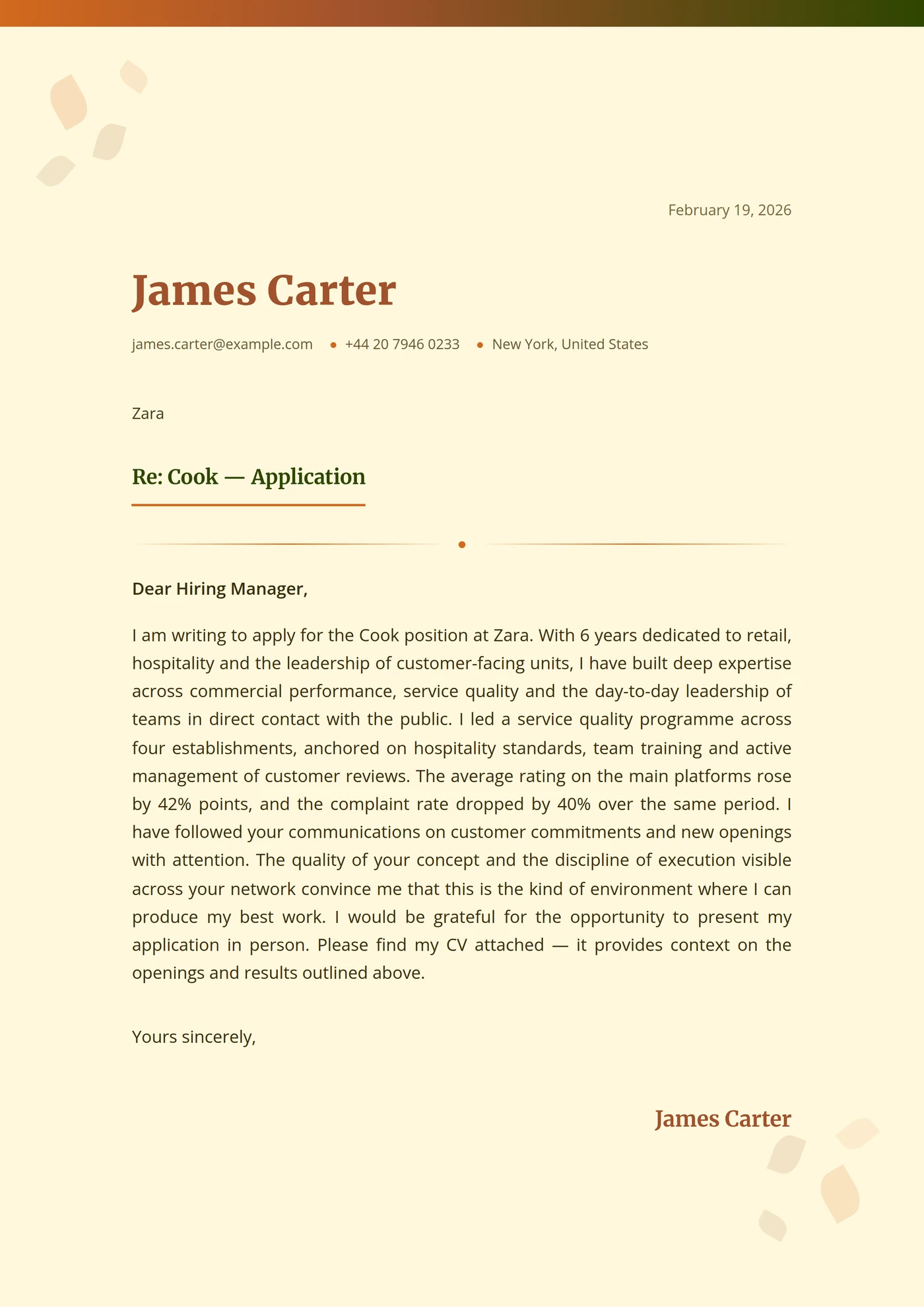
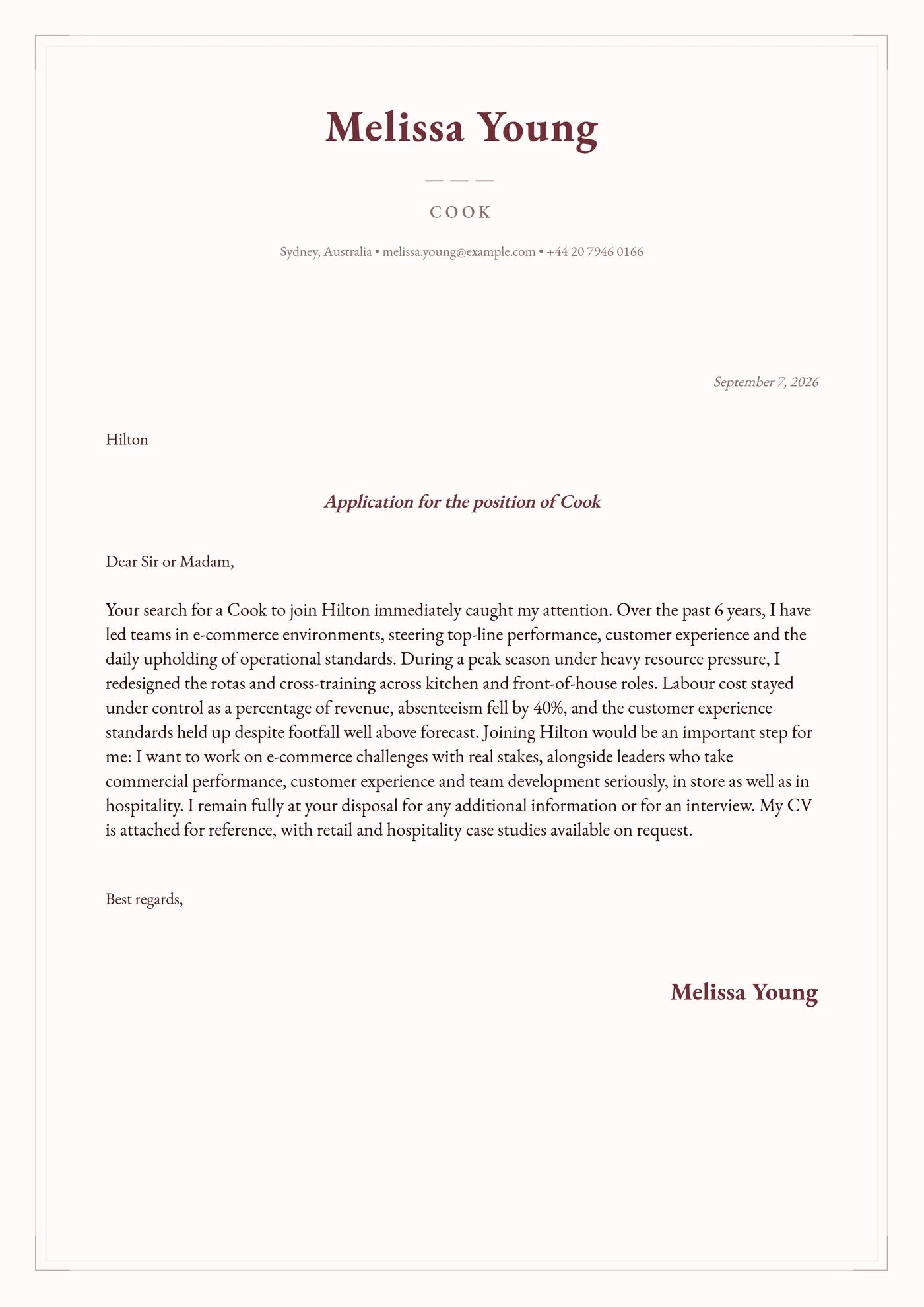
Three templates selected for this role, from junior to senior level. Tap a template to discover its full design and use it in your document.
How to Write a Cook Cover Letter
Open with a direct statement of the specific role and kitchen or restaurant you are applying to, and if possible reference something specific about their menu, concept, or reputation to show genuine interest rather than a mass-sent letter. Avoid generic openers like ‘I am writing to apply for the Cook position’ with no context; instead try something like ‘Having trained under classic French technique and worked two years on a high-volume line, I was excited to see the Line Cook opening at [Restaurant Name].’ Personalize the greeting by using the hiring manager's or head chef's name whenever it's listed in the posting or found through a quick search; ‘Dear Chef [Name]’ or ‘Dear Hiring Manager’ is far stronger than ‘To Whom It May Concern.’ This small detail signals attention to detail, a trait every kitchen values.
Keep the body to two or three focused paragraphs. The first should establish your relevant experience — stations worked, cuisine types, volume handled, and any certifications like food handler cards or ServSafe. The second should highlight one or two concrete achievements, such as reducing food waste by 15%, developing a new special, or training junior cooks, always tying the result back to value for the employer. The final body paragraph should address motivation: why this particular kitchen, cuisine, or team appeals to you, and how your working style (speed, cleanliness, teamwork under pressure) fits their environment. Balance is key — avoid simply repeating your resume's task list; instead show impact and fit, and keep total length under one page.
Close with a clear call to action, such as requesting an interview or a trial shift (stage), and reaffirm enthusiasm for contributing to the kitchen's success. Sign off professionally with ‘Sincerely’ or ‘Best regards,’ followed by your full name, and avoid overly casual sign-offs like ‘Cheers’ or apologetic language such as ‘I hope this is good enough.’
The tone should be professional but warm, reflecting the physical, hands-on, and team-driven nature of kitchen work — avoid overly corporate language that feels out of place in a culinary setting. Confident, specific language about technique, speed, and reliability signals professionalism far more than generic phrases like ‘hard worker’ or ‘team player’ used without context.
Skills to Mention in Your Cook Cover Letter
Common Mistakes
A generic Cook cover letter that could apply to any restaurant — using phrases like ‘I love cooking food’ without naming the establishment, cuisine, or role — signals low interest to hiring chefs. Fix this by referencing the specific restaurant's concept, menu style, or values and connecting your exact skills to their stated needs.
Cover letters longer than one page are a common mistake, especially when candidates restate their entire resume; kitchens move fast and hiring managers rarely have time to read lengthy letters. Aim for 250-350 words and three tight paragraphs that highlight only the most relevant experience and one or two achievements.
Simply listing duties like ‘prepared food and cleaned stations’ without results makes a candidate blend in with every other applicant. Reframe duties into achievements, such as ‘Streamlined prep process, cutting ticket times by 20% during peak service,’ to show measurable impact.
Common formatting errors include using decorative fonts, submitting the letter as an unreadable image, or forgetting to save it as a PDF or .docx file with a clear filename. Also avoid missing or generic subject lines when emailing — always include the job title and your name for easy tracking.
Frequently Asked Questions
While some restaurants only require a resume, including a well-written cover letter helps you stand out, especially for competitive kitchens or upscale establishments. It shows initiative and gives you space to explain your passion for the cuisine or brigade you're applying to, which a resume alone cannot convey.
Ideally, keep it to one page or around 250-350 words, covering your relevant experience, one key achievement, and your motivation for the role. Kitchens value efficiency, so a concise, well-structured letter reflects well on your work style.
Yes, tailoring each letter to the specific restaurant, cuisine, and role significantly increases your chances since hiring chefs can easily spot copy-paste letters. Reference the establishment's menu or reputation and match your listed skills to the exact station or responsibilities mentioned in the job posting.
In the US, a cover letter is often optional but recommended for upscale or competitive kitchens, while in the UK and much of the EU it's less commonly required for entry-level Cook roles but still appreciated for mid-to-senior positions. Always check the job posting, since fine dining and hotel kitchens across all regions tend to expect a cover letter regardless of local norms.
AI tools can be a helpful starting point for structure and wording, but you should always personalize the content with specific details about the restaurant, your real experience, and genuine motivation. Hiring chefs can often spot generic AI-generated text, so edit heavily to make it sound authentic and specific to you.
Submit your letter as a PDF to preserve formatting, unless the employer's application system specifically requests a .docx file or plain text in an online form. Use a simple, readable font, standard business letter structure, and a clear filename including your name and the job title.
Related Job Titles
Explore more about