Cook Resignation Letter Templates

Professional resignation letter templates for Cook professionals — formal, short, email versions with expert tips.

We currently have 64 Cook job postings in our database. Write your letter — it's free

When to Use

New Job Opportunity
When leaving for a new opportunity, keep the tone positive and brief, thanking the kitchen for the experience without going into detail about the new employer or pay increase. Focus on gratitude for skills gained and offer to help with the transition, avoiding any comparison that implies the current kitchen was inferior.
Career Change
If you are leaving the culinary field entirely, frame the decision as a personal path forward rather than dissatisfaction with kitchen work, since chefs and owners often take this personally. Keep the explanation general — such as pursuing a different industry — and emphasize appreciation for the training and mentorship received.
Personal Reasons
For health, family, or burnout-related resignations, share only what feels comfortable; a simple statement like personal reasons is sufficient and professional. Avoid detailing symptoms or family issues in writing, and keep the letter short, polite, and focused on the transition rather than the cause.
Relocation
When relocating, state the move clearly and, if applicable, the timeline so the kitchen can plan staffing coverage. Since most cook roles are not remote, there is usually no need to negotiate remote work — simply confirm your last working day and offer to help train a replacement if time allows.

Recommended templates for Cook

Three templates selected for this role, from junior to senior level. Tap a template to discover its full design and use it in your document.
Junior
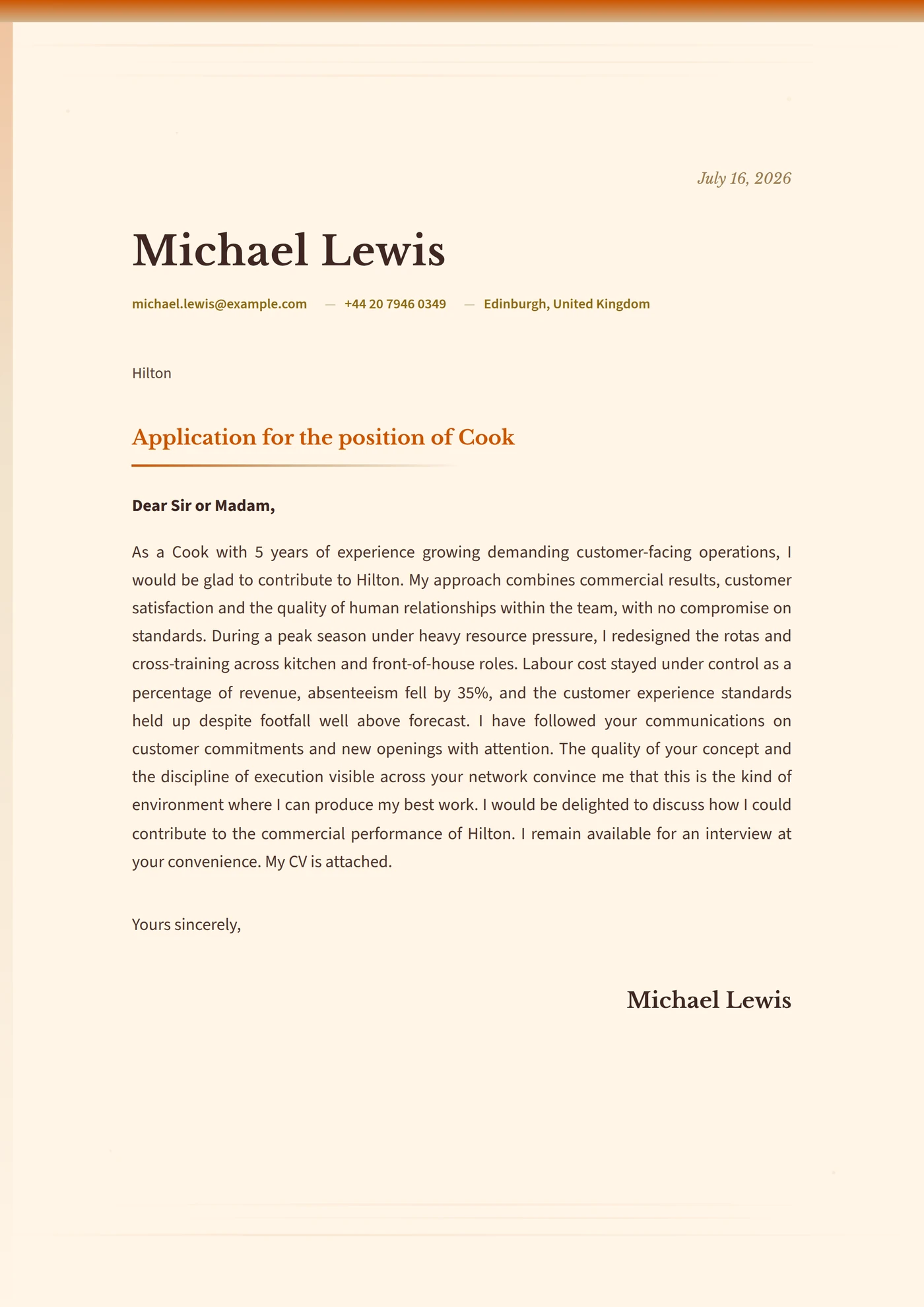
Desert Sand — Junior

Desert Sand

minimal

A minimal and clean layout suits a junior cook writing a first resignation letter, keeping the message short, respectful, and free of unnecessary formality.

Learn more about this template
Mid-level
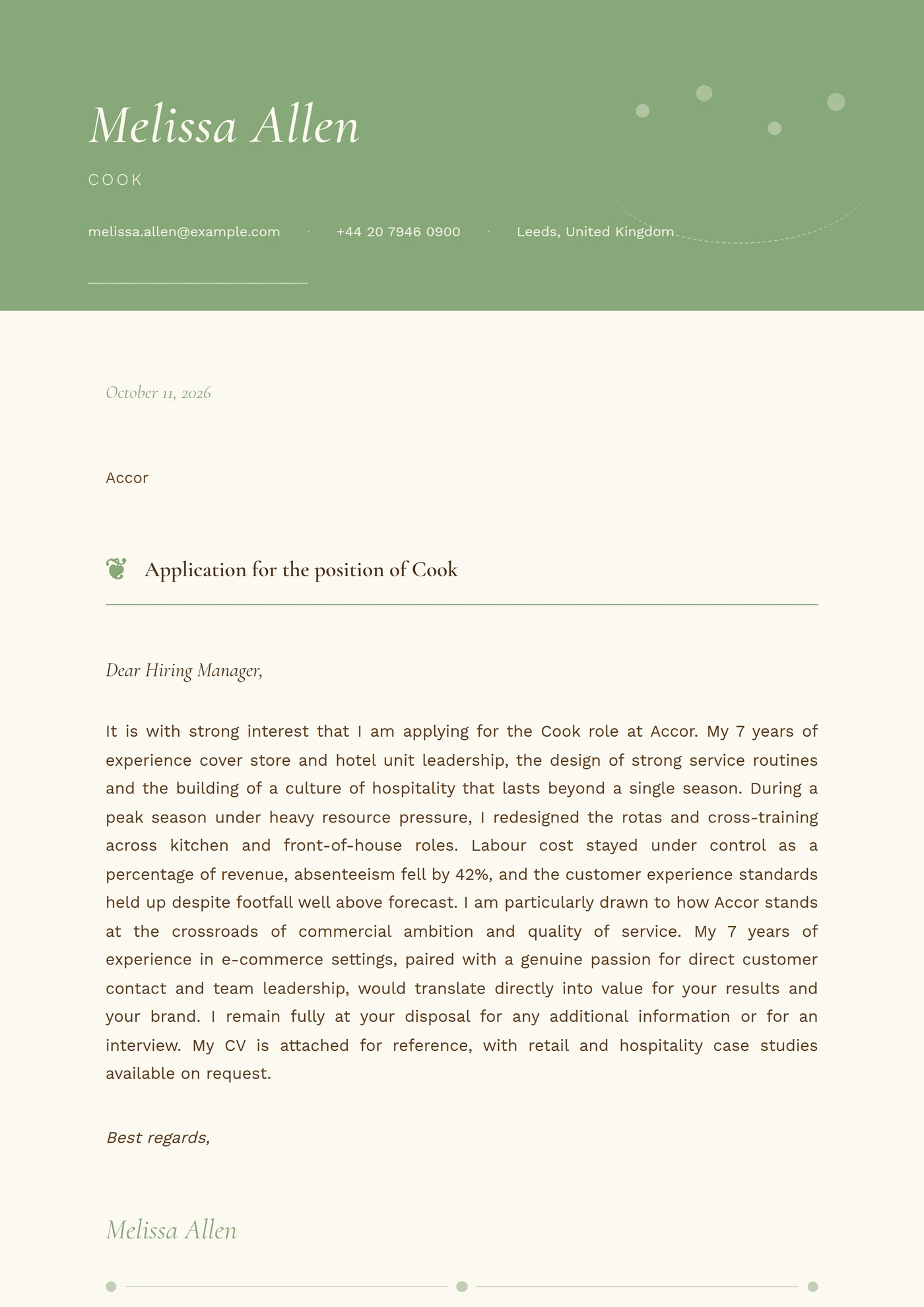
Sage Garden — Mid-level

Sage Garden

modern

This modern template balances professionalism with warmth, fitting a mid-level cook who wants to sound courteous while still being direct about their notice period.

Learn more about this template
Senior
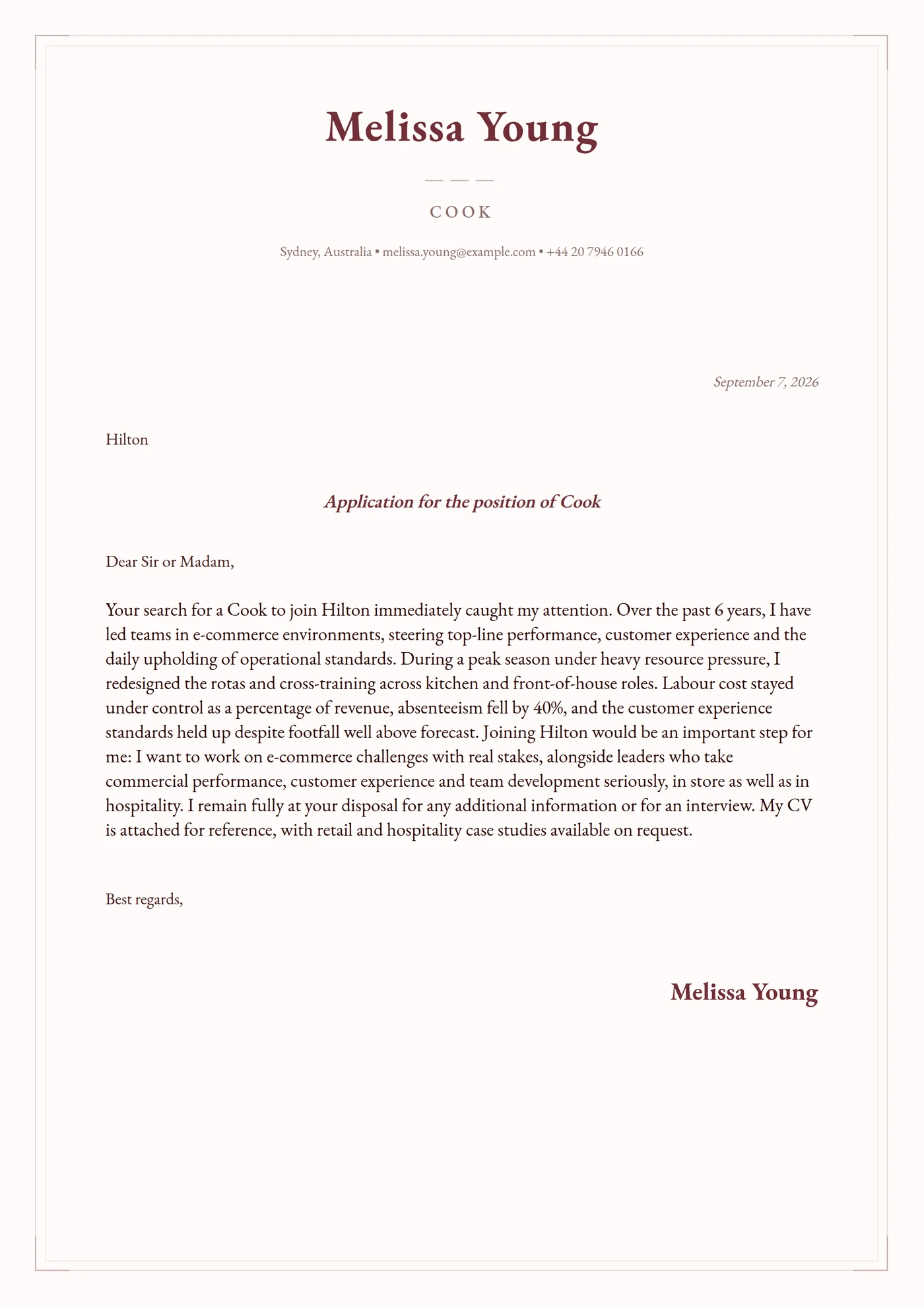
Burgundy Velvet — Senior

Burgundy Velvet

professional

The professional tone and polished structure of this template give a senior cook or sous chef the gravitas needed to formally offer a smooth handover and mentorship of junior staff.

Learn more about this template

Tips for Resigning

Notice Period
Most kitchens expect two weeks notice, matching standard hospitality practice, though some smaller establishments may only require one week due to scheduling flexibility. Always check your employment contract or staff handbook, since some restaurants specify longer notice for supervisory cook roles.
Tone
Keep the letter grateful and professional, thanking the chef or owner for the opportunity and skills learned, even if the experience was difficult. Never criticize kitchen management, coworkers, or working conditions in writing, as kitchen communities are small and reputations travel fast.
Timing
Try to resign after a shift, not during service, and avoid peak periods like holidays, weekend rushes, or right before a major event the kitchen is preparing for. Giving notice early in the week allows the chef time to start planning staffing coverage without added pressure.
Preserving Relationships
Offer to help train your replacement or document key recipes and prep lists before you leave, which is highly valued in fast-paced kitchens. Staying professional through your last shift and thanking the team personally helps preserve references and reputation within the tight-knit culinary industry.

Notice Period Rules

United States
Cook positions in the US are typically at-will employment, meaning no legal notice is required, but giving two weeks notice is the professional standard expected across restaurants and hotels. Some union kitchens or larger hospitality groups may have specific notice clauses in their employment agreements.
United Kingdom
In the UK, statutory minimum notice for employees with over one month of service is one week, though many restaurant contracts specify two to four weeks depending on seniority. Cooks should always check their written contract, as hospitality employers often set longer contractual notice than the legal minimum.
Canada
Notice requirements vary by province, but most require at least one to two weeks of statutory notice for cooks with several months of service. Under the reasonable notice doctrine, longer-tenured or supervisory cooks may be expected to provide more notice, though this mainly applies to employer-initiated terminations rather than resignations.
Europe
In France, notice periods for cooks are often governed by the collective bargaining agreement (convention collective) for hospitality (HCR), typically ranging from one to two weeks depending on tenure. In Germany, statutory notice is four weeks to the 15th or end of the month unless the employment contract specifies otherwise, and cooks should confirm terms with their Arbeitsvertrag.

Frequently Asked Questions

While a verbal conversation with the head chef is often the first step, a written resignation letter creates a clear record of your last working day and protects both parties. Many restaurants also require it for payroll and scheduling purposes, so it is best practice even in informal kitchen environments.

The industry standard is two weeks, which gives the kitchen enough time to adjust schedules and start looking for a replacement. If your contract specifies a different period, such as one week for part-time roles or longer for management positions, follow that instead.

No, an employer cannot legally force an employee to stay against their will, even in hospitality roles with tight staffing. A chef may ask you to reconsider or negotiate your last day, but ultimately the decision to resign and the effective date are yours to determine within reasonable notice.

In-person resignation followed by a written letter or email is the most professional approach, especially in close-knit kitchen teams. However, if scheduling makes an in-person conversation difficult, sending a clear and courteous email with your last working day is acceptable, provided you follow up with the chef directly when possible.

Need a personalized resignation letter?

Use our AI to generate a professional, polished letter tailored to your role and situation in minutes.

Write your letter — it's free

Start for free. No credit card required.