
About this template
The Due Diligence template is a professional cover letter in Source Serif, organised as a DD memo: project name, date, status box, then four labelled sections (background, role fit, evidence, references). Compact, factual, no flourish, it reproduces the grammar of fairness opinions and investment memos. Compatible with the Big Four transaction services ATS (Workday at Deloitte, SmartRecruiters at EY-Parthenon, Greenhouse at Alvarez & Marsal) and the PE funds' applicant tracking (KKR, Carlyle Group, Apollo Global Management, Bain Capital, Blackstone).
Who is it for?
It fits candidates in M&A advisory (Goldman Sachs, Morgan Stanley, Lazard, Evercore, Centerview Partners), transaction services teams (Deloitte M&A Transaction Services, KPMG Deal Advisory, PwC Deals), private equity due diligence (Bain Cap, KKR, Apollo) and corporate development at Fortune 500 acquirers (Cisco Corporate Development, Salesforce Strategic Investments, J&J Innovation). Profiles whose daily output is exactly this kind of memo, who want recruiters to read their cover letter as a professional deliverable rather than a narrative.
How to use it
The project name in the header can mirror an internal naming convention ("Project Marathon — Application MD VP / Bain Capital New York"). The status box signals availability immediately ("Available subject to 90-day non-compete cooldown"). The four sections must stay short: 50-80 words each, in bullets or short aligned sentences. For evidence, cite signed deals from your clear-room work (target, transaction size, your precise role: LBO modeling, commercial DD, vendor DD) without exceeding one line per deal. References reduce to two named individuals, available on request.
Frequently asked questions
What is the ideal length?
One page, strict, ideally 350-400 words split across the four sections. Beyond that the DD memo format loses credibility: a transaction memo running over one page signals a synthesis failure, an eliminating defect in the sector. To deepen a file, attach a separate experience deck rather than padding the letter itself.
Should I cite confidential deals?
Never by name before signing. Pre-announcement, describe the deal by category: "Secondary LBO, telecom infrastructure, $400-600M enterprise value, 2025." Once the deal closes publicly (Mergermarket, Wall Street Journal, FT Lex coverage), you can name it and specify your role. Recruiters cross-reference CVs with PitchBook and Mergermarket databases — any approximation is detectable in five minutes.
Does the format work for a junior with no sourced deals?
Yes, by replacing the evidence section with case studies or modelling work done in-firm ("LBO modelling on portfolio target, exit-multiple scenarios at 3.0x to 4.5x MoIC"). The DD format does not require a deal book, it requires presentation discipline. For a first- or second-year analyst, this is even the format that best signals mastery of the professional register expected at MBA admissions or in buy-side recruiting.
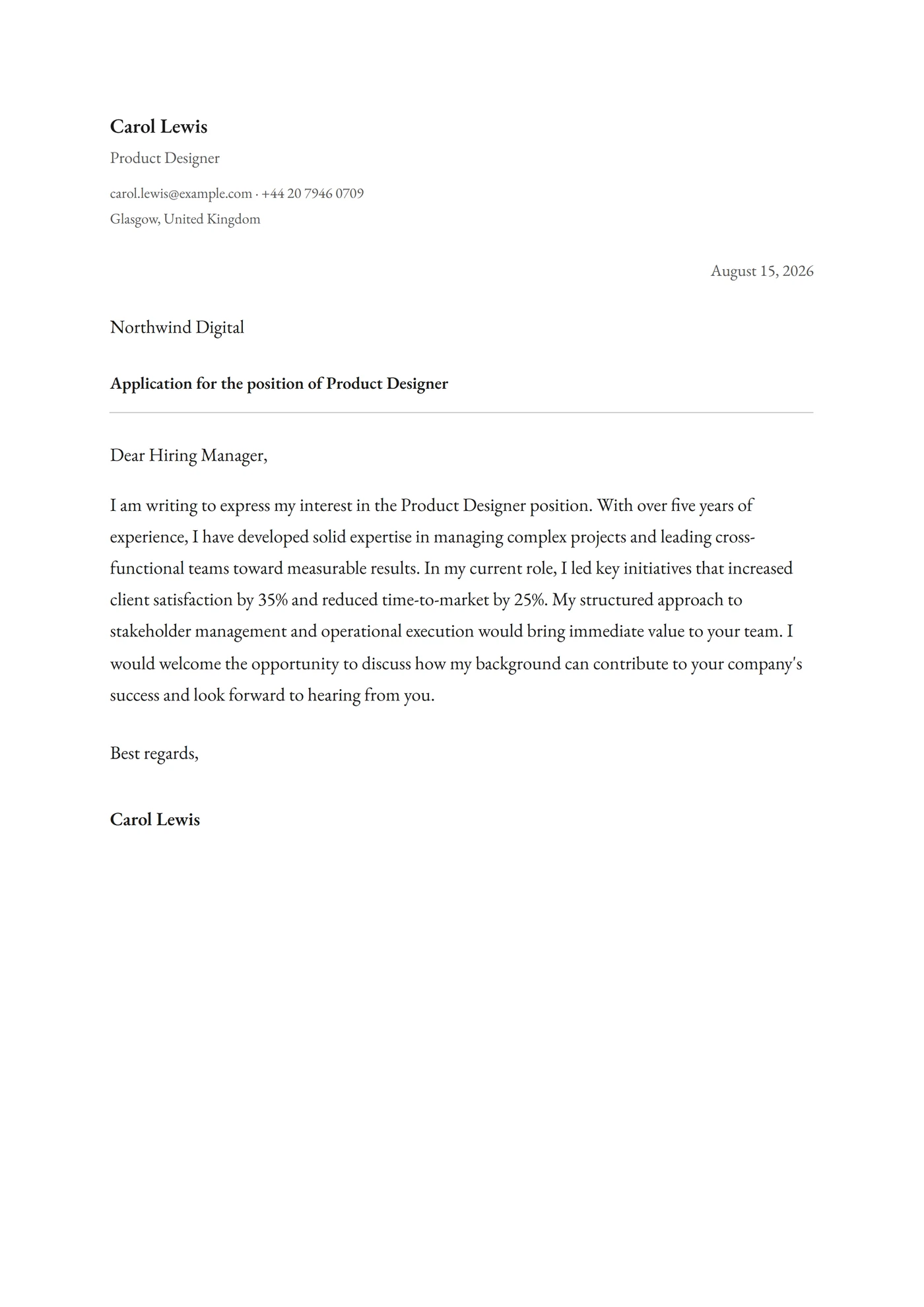
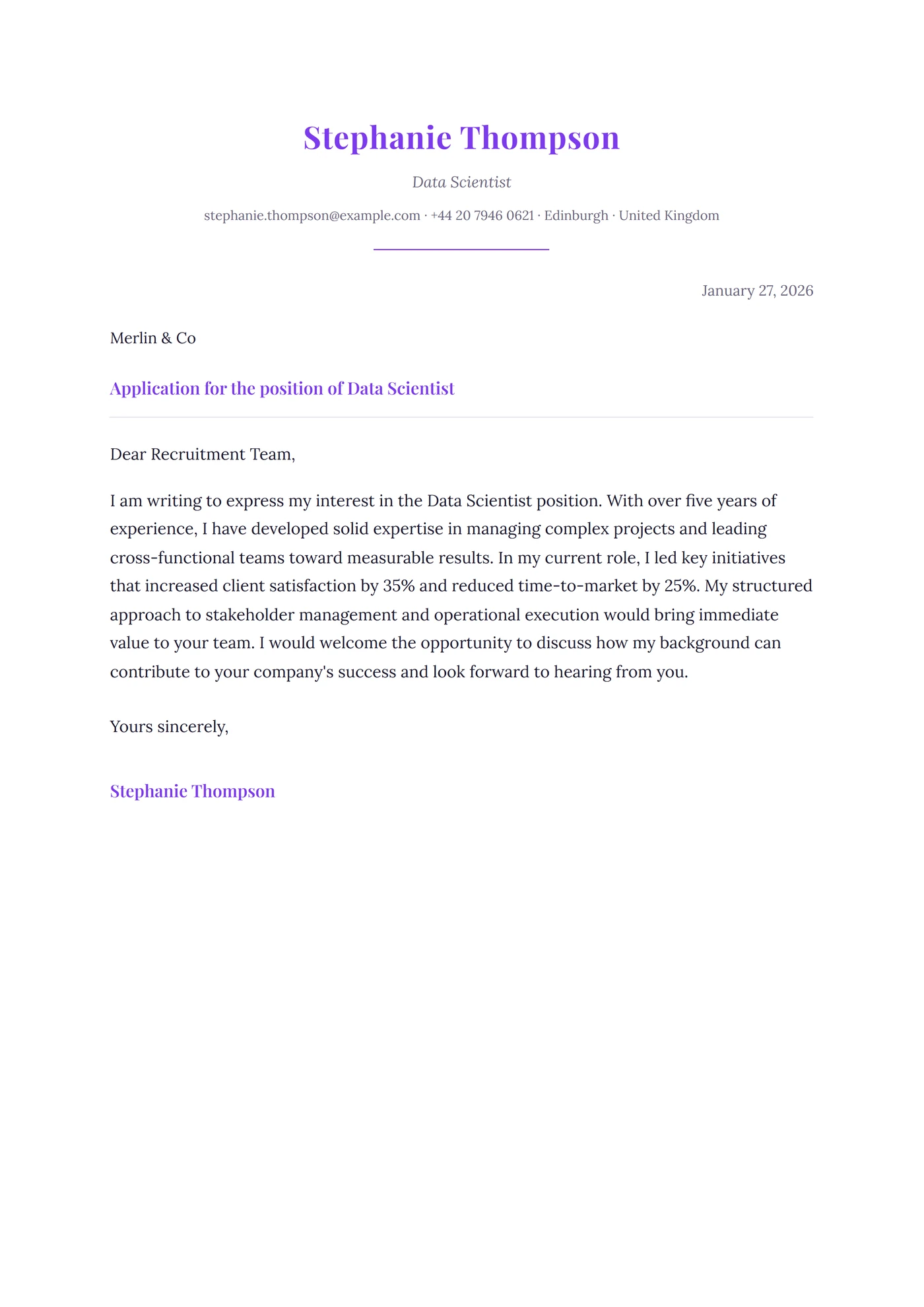
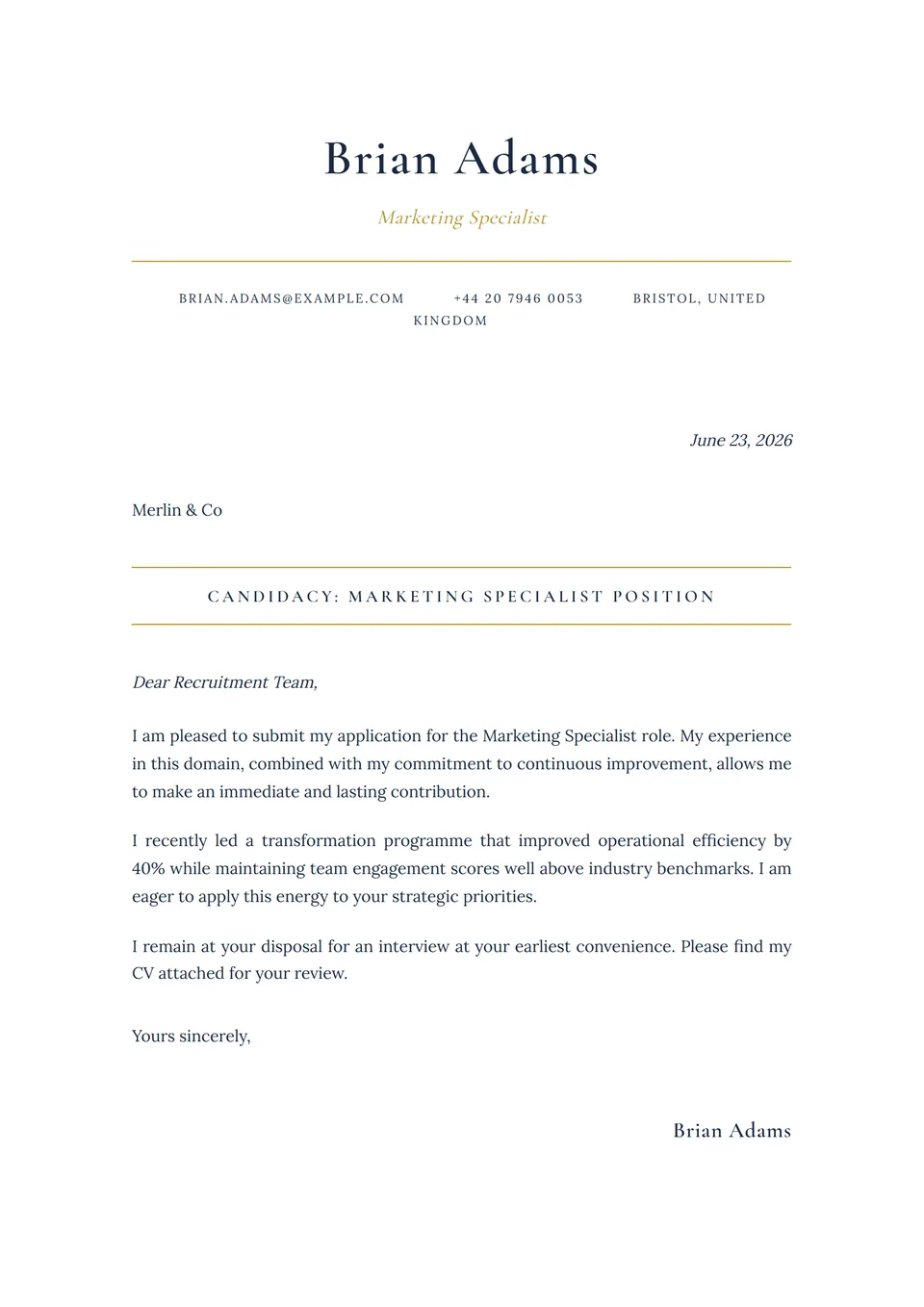
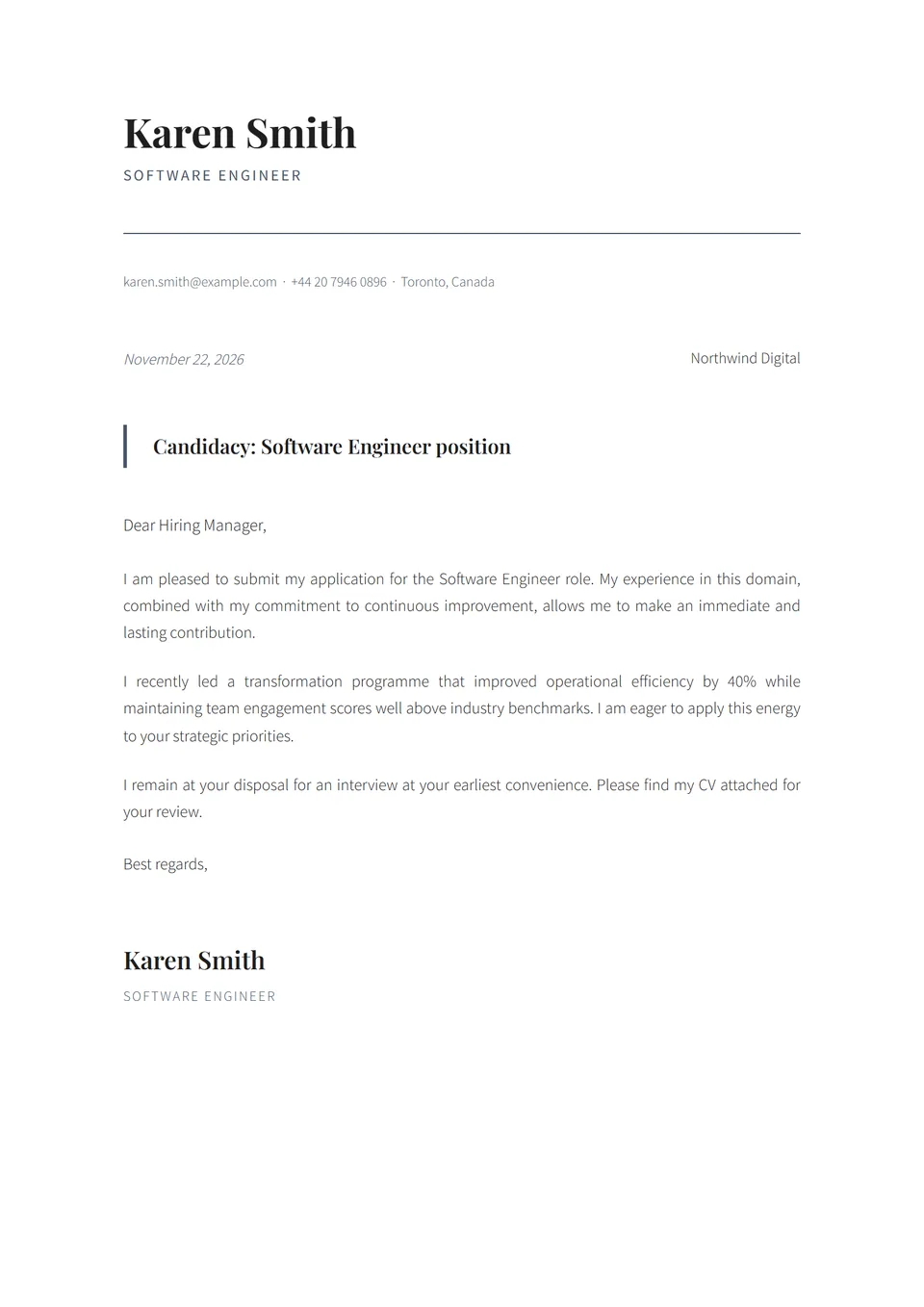
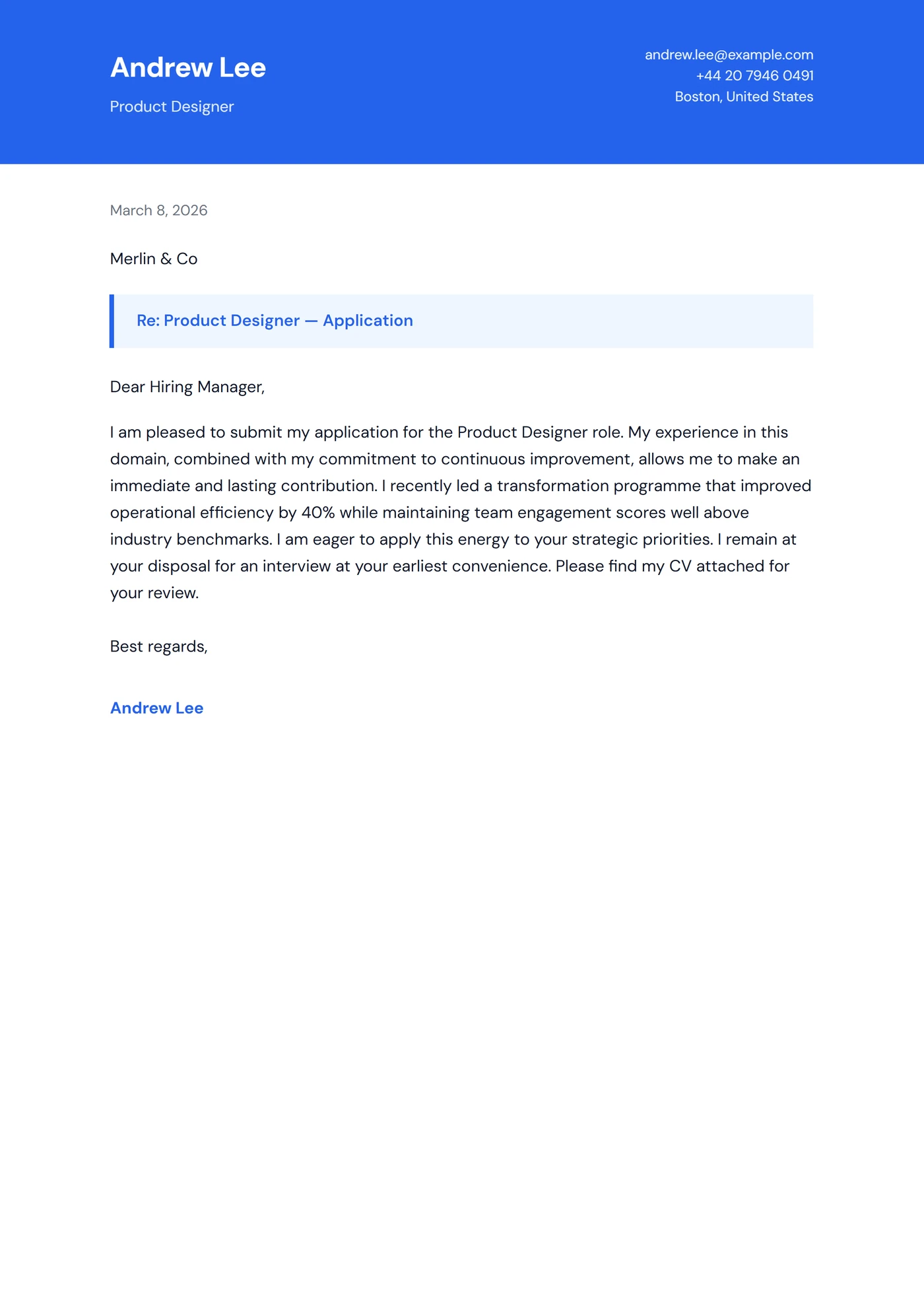
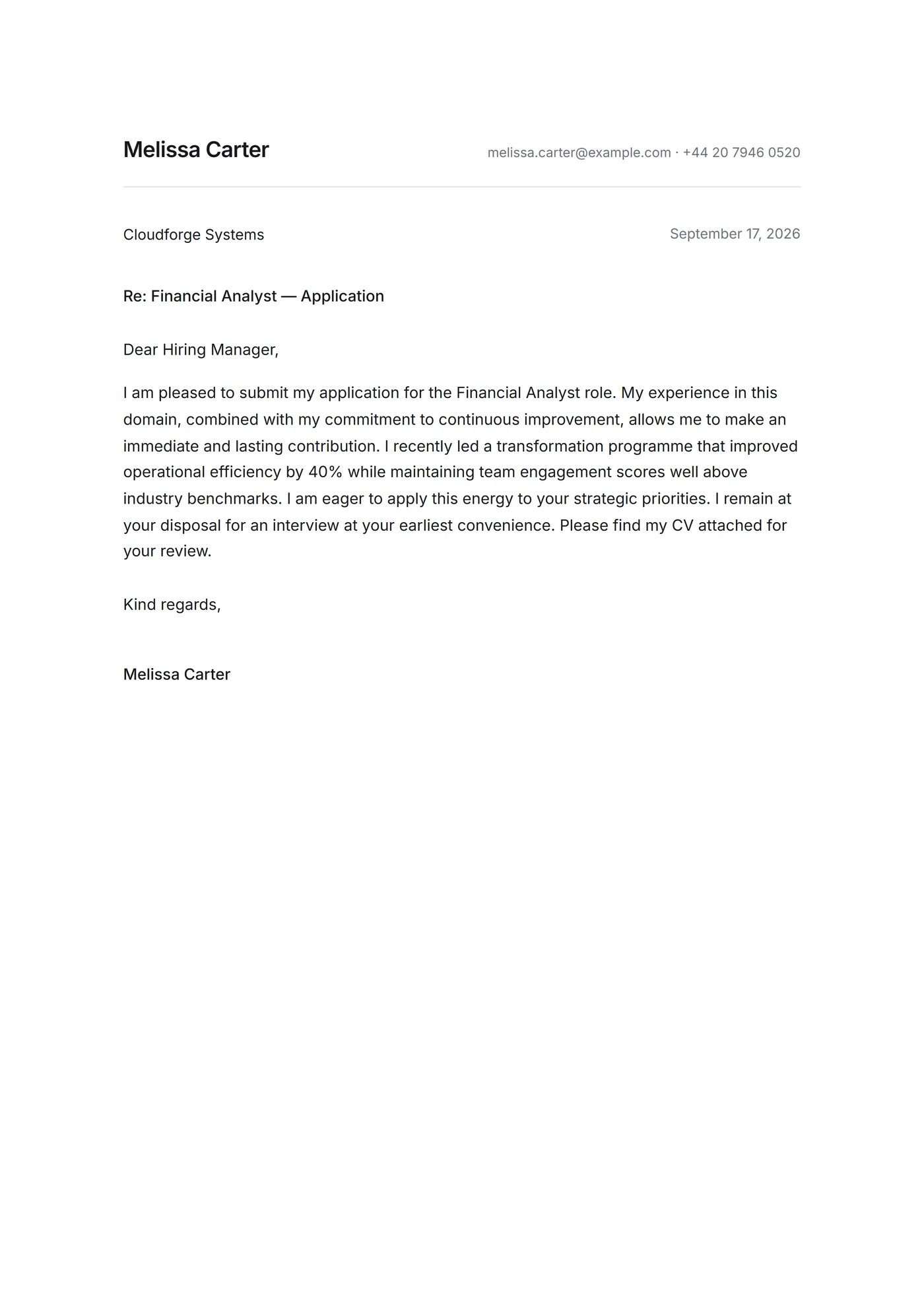
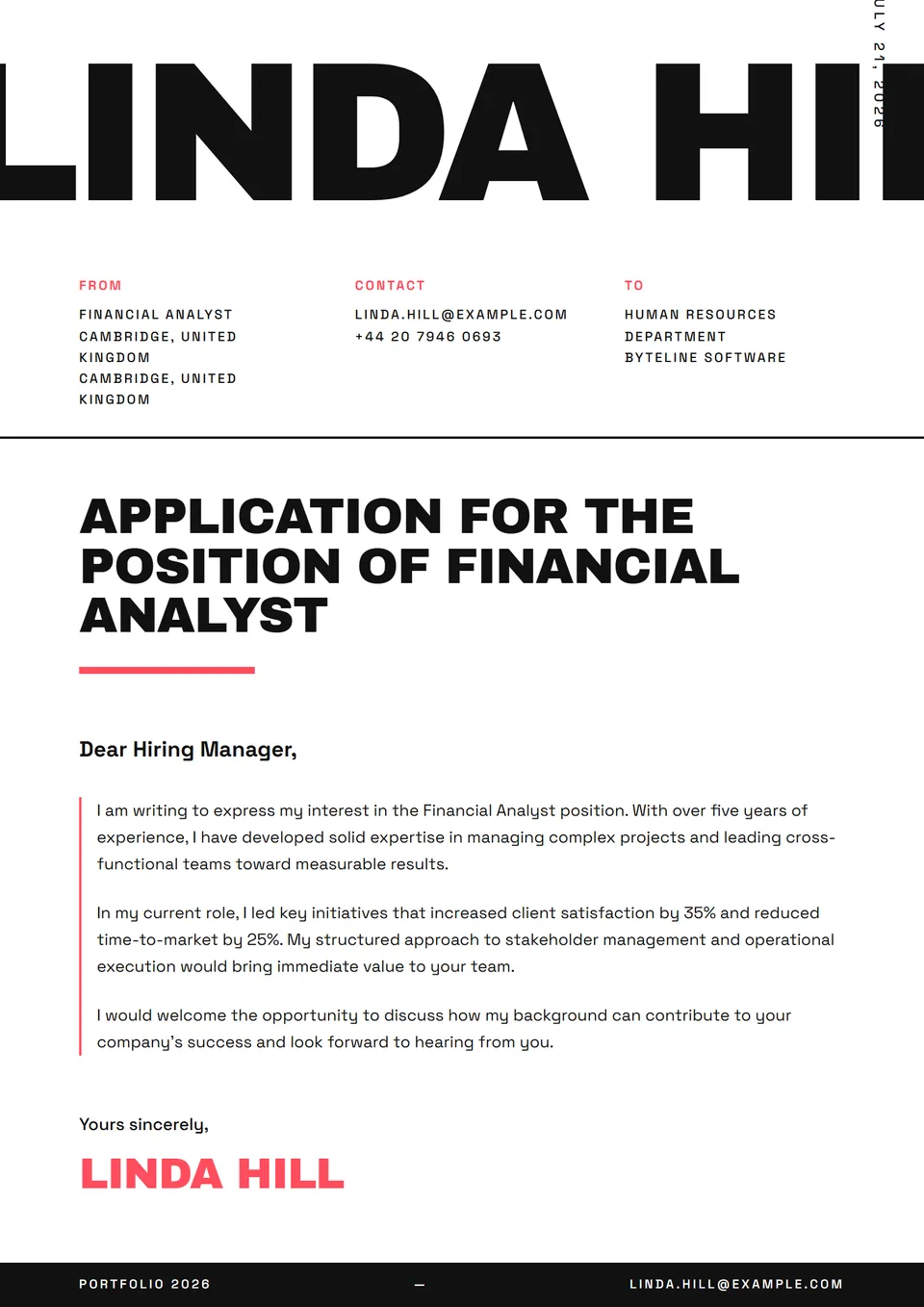
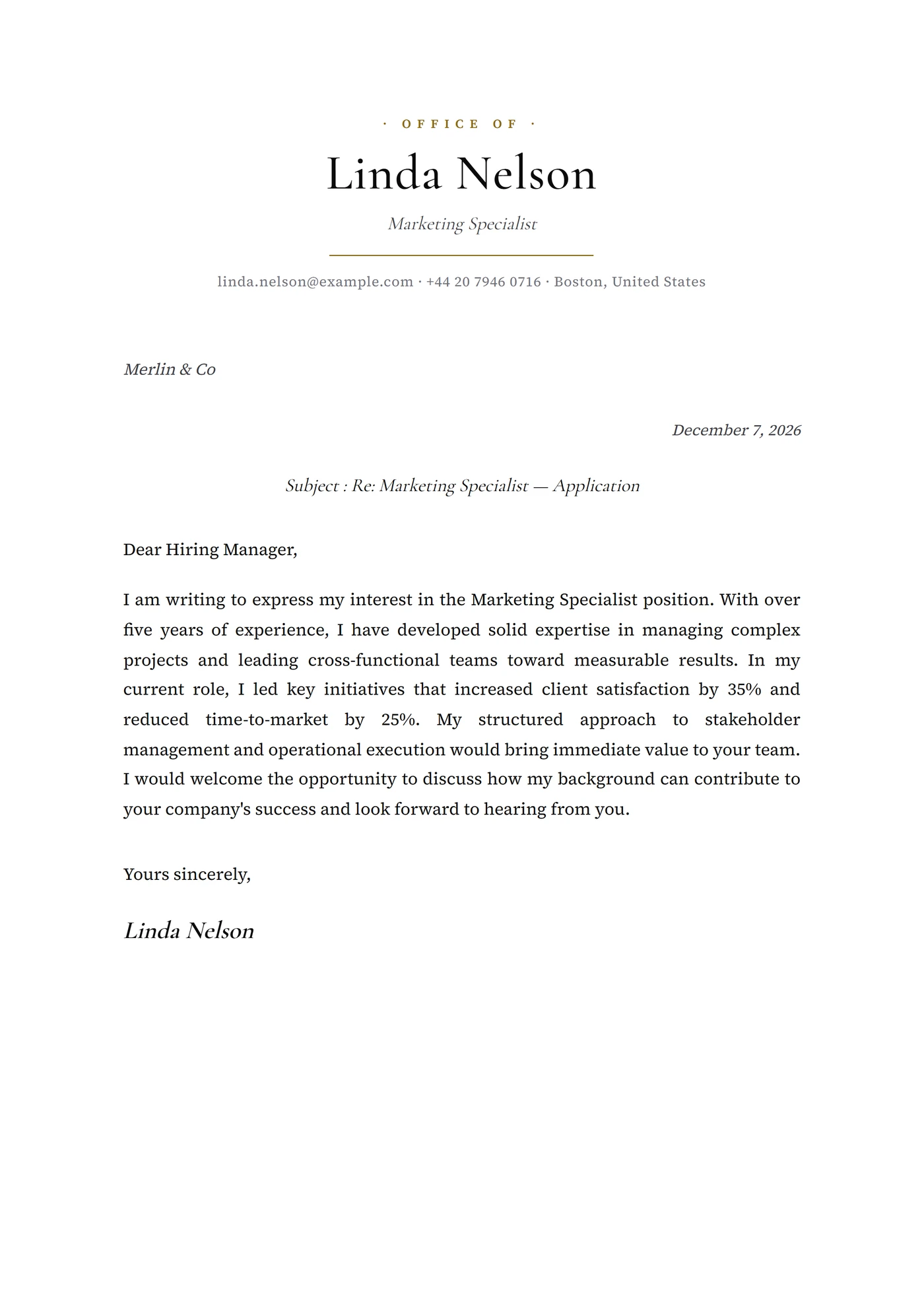
Seen in real examples
Due Diligence in action across real roles
Discover how this template fits different jobs. Each example is written specifically for the role and picks this design as one of its top picks.