
When You Need a Cover Letter for Butcher
A cover letter lets a Butcher applicant show personality, pride in craftsmanship, and knowledge of specific cuts or food safety standards that a resume list alone cannot convey. It is the right place to explain why you want to work for that particular shop, grocery chain, or processing facility and to highlight customer service strengths. Employers often use it to gauge communication skills, which matter when butchers interact directly with customers.
For an internship or apprenticeship, the cover letter should focus on enthusiasm for learning the trade, any exposure to kitchens, farms, or meat handling, and willingness to follow safety protocols. Since formal experience is limited, emphasize transferable skills like attention to detail, physical stamina, and reliability, and mention any relevant coursework or certifications like food handler training.
When moving into butchery from another field, frame skills such as precision, hand-eye coordination, customer service, or experience in fast-paced environments as directly transferable. Explain the motivation behind the switch clearly and show you understand the physical and technical demands of the trade, perhaps referencing any knife skills or home-processing experience.
For an internal promotion to Head Butcher or Meat Department Manager, the tone should be confident and highlight measurable contributions such as reduced waste, improved display presentation, or mentoring junior staff. Reference specific achievements within the company and align your goals with the store's broader objectives to show leadership readiness.
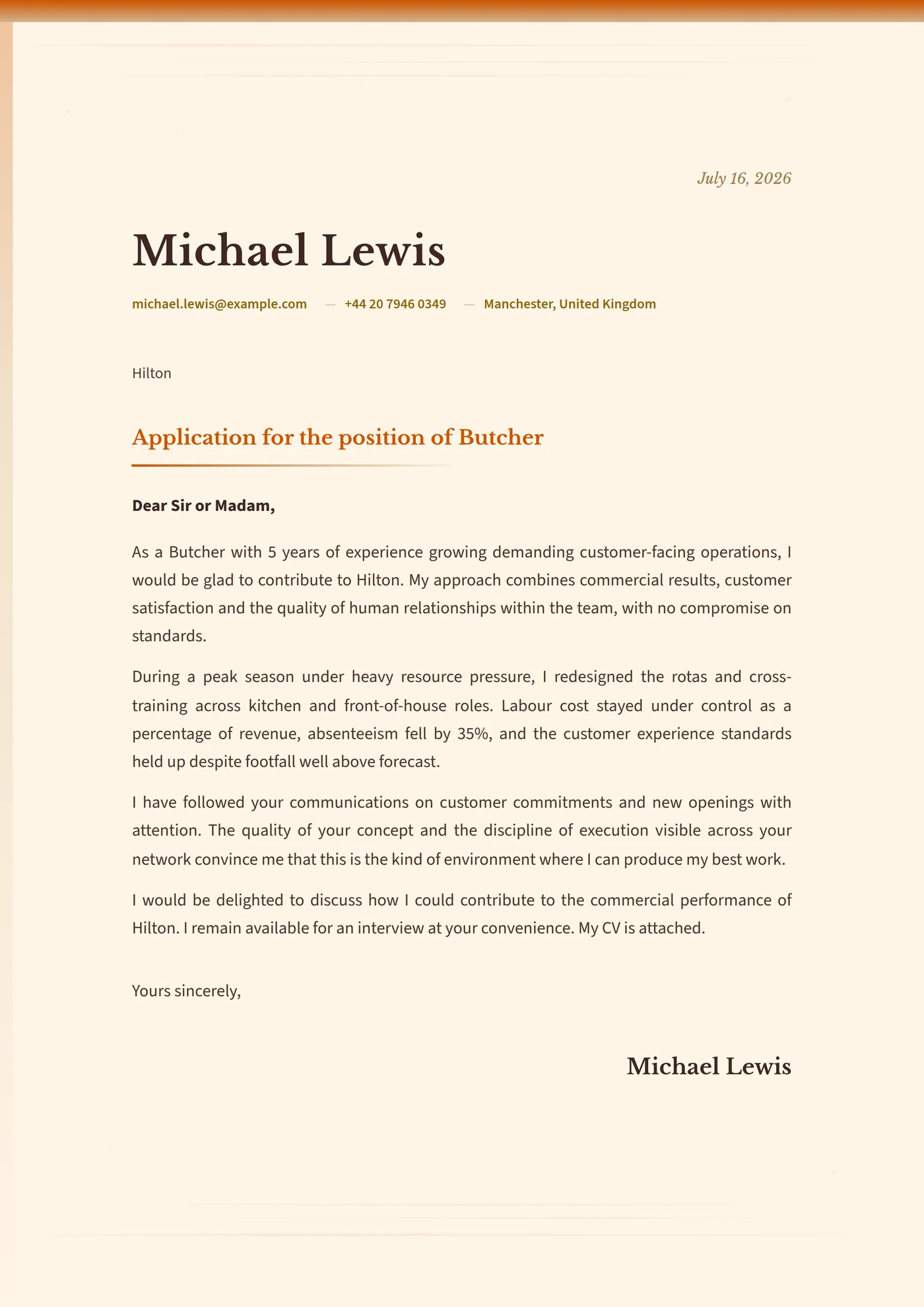
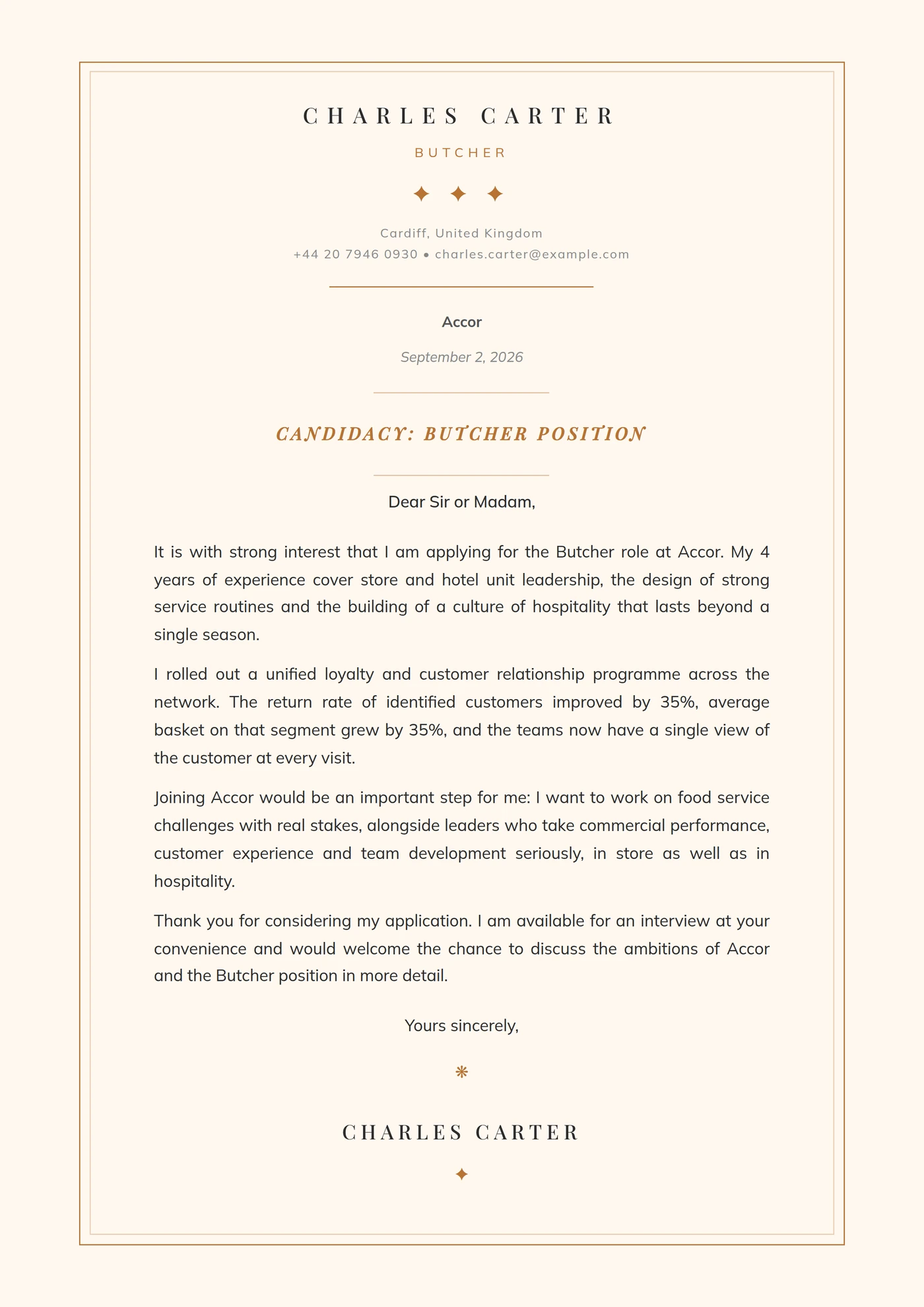
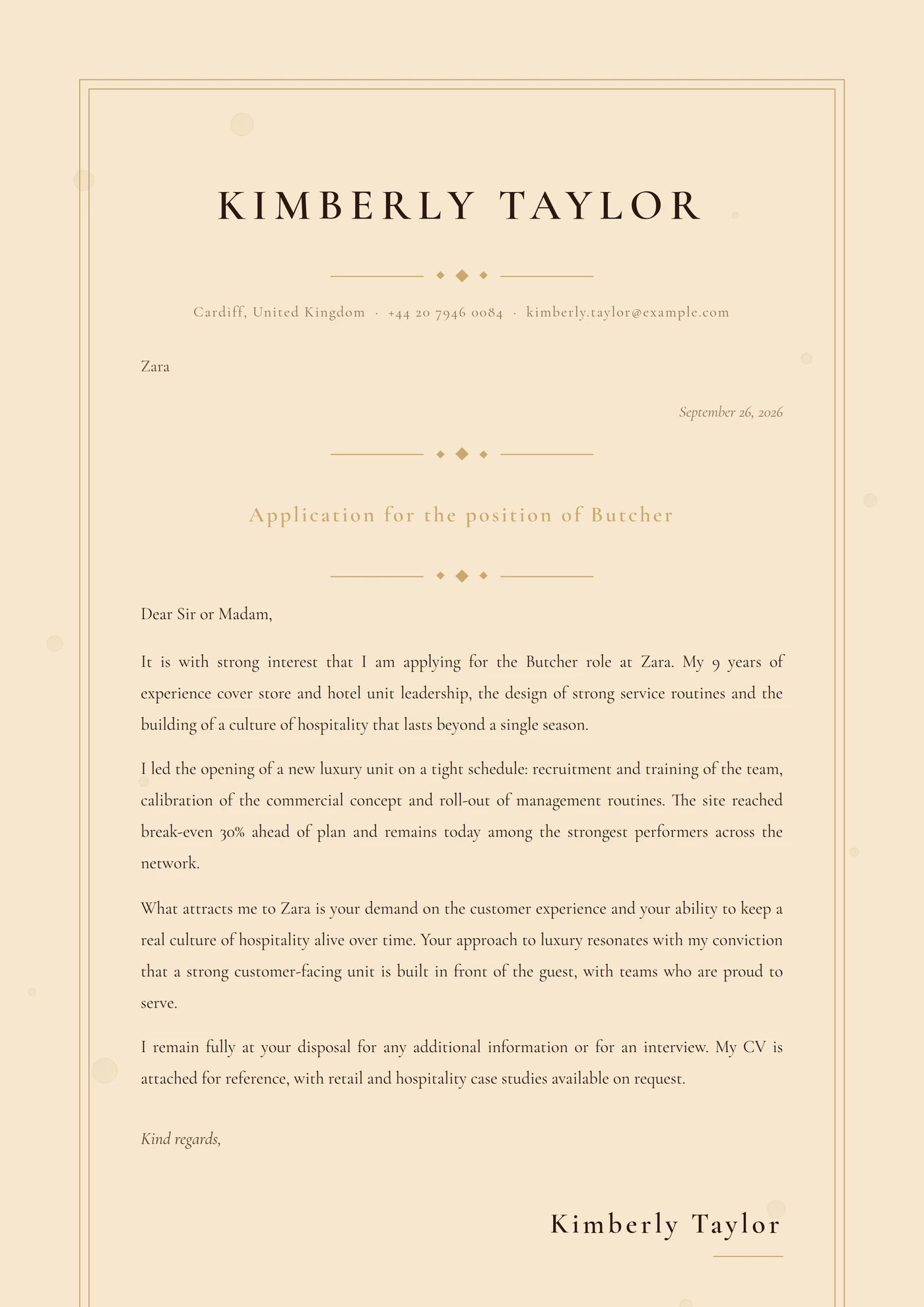
Recommended templates for Butcher
Three templates selected for this role, from junior to senior level. Tap a template to discover its full design and use it in your document.
How to Write a Butcher Cover Letter
Open with a direct statement of the role you are applying for and one strong credential, such as years of experience or a key skill like meat cutting precision. Avoid generic openers like 'I am writing to apply' and instead lead with something memorable, such as a specific achievement or passion for the trade. Whenever possible, address the letter to the hiring manager or shop owner by name rather than using 'To Whom It May Concern.' This small personalization shows initiative and genuine interest in that specific employer.
The body should typically span two to three paragraphs. The first should cover your core technical skills — such as carcass breakdown, portion control, or knowledge of USDA grading — paired with relevant experience. The second paragraph should highlight a concrete achievement, like reducing waste percentages, improving display sales, or training new staff, using numbers wherever possible. A third paragraph can address motivation: why this particular shop, butchery, or grocery chain appeals to you, and how your values around food quality and customer service align with theirs. Balance hard skills with soft skills like communication and teamwork, since butchers often work closely with customers and kitchen staff.
End with a clear call to action, such as expressing interest in an interview and stating your availability. Thank the reader for their time and reiterate enthusiasm for contributing to their team. Avoid vague closings like 'Hope to hear from you soon' — instead use a confident, professional sign-off such as 'Sincerely' followed by your full name and contact information.
The tone should be professional yet approachable, reflecting the hands-on, customer-facing nature of butchery work. Avoid overly casual language, but do not sound stiff or overly corporate — a warm, confident tone that conveys pride in craftsmanship resonates well with hiring managers in this trade.
Skills to Mention in Your Butcher Cover Letter
Common Mistakes
A generic cover letter that could apply to any retail job fails to show knowledge of the butchery trade or the specific employer. Fix this by mentioning the shop's specialties, such as locally sourced meats or custom cuts, and tying your skills directly to their needs.
Keep the letter to one page, ideally three to four concise paragraphs. Cut repetitive details already found on the resume and focus only on the strongest, most relevant points.
Simply listing duties like 'cut and prepared meat' without results fails to differentiate you from other candidates. Reframe duties into achievements, such as 'reduced product waste by 15% through improved cutting techniques' or 'increased counter sales through display improvements.'
Avoid unusual fonts, excessive colors, or overly decorative templates that distract from content; stick to clean, readable formatting. Submit in PDF format unless otherwise specified, and ensure the file name and any email subject line are professional and clearly labeled.
Frequently Asked Questions
Yes, even for hands-on trade roles like butchery, a cover letter helps you stand out by showing enthusiasm, relevant skills, and knowledge of the specific employer. It is especially useful when competing against candidates with similar resumes.
Aim for one page, roughly three to four short paragraphs. Hiring managers in retail and food service roles prefer concise letters that get straight to relevant skills and experience.
Yes, tailoring each letter to mention the specific shop, its specialties, or its customer base shows genuine interest and increases your chances of standing out. A generic, copy-pasted letter is easy for hiring managers to spot.
In the US and UK, a cover letter is often optional but recommended, especially for specialty or supervisory butcher roles. In many EU countries, particularly for apprenticeships or formal retail positions, a cover letter is more commonly expected as part of a complete application.
AI tools can be a helpful starting point for structure and wording, but you should personalize the content with specific skills, achievements, and details about the employer. Always review the final letter to ensure it sounds authentic and accurately represents your experience.
Submit your cover letter as a PDF to preserve formatting across devices, unless the employer specifically requests a .docx file or text pasted into an application portal. Use a simple, professional layout with clear fonts and standard margins.
Related Job Titles
Explore more about