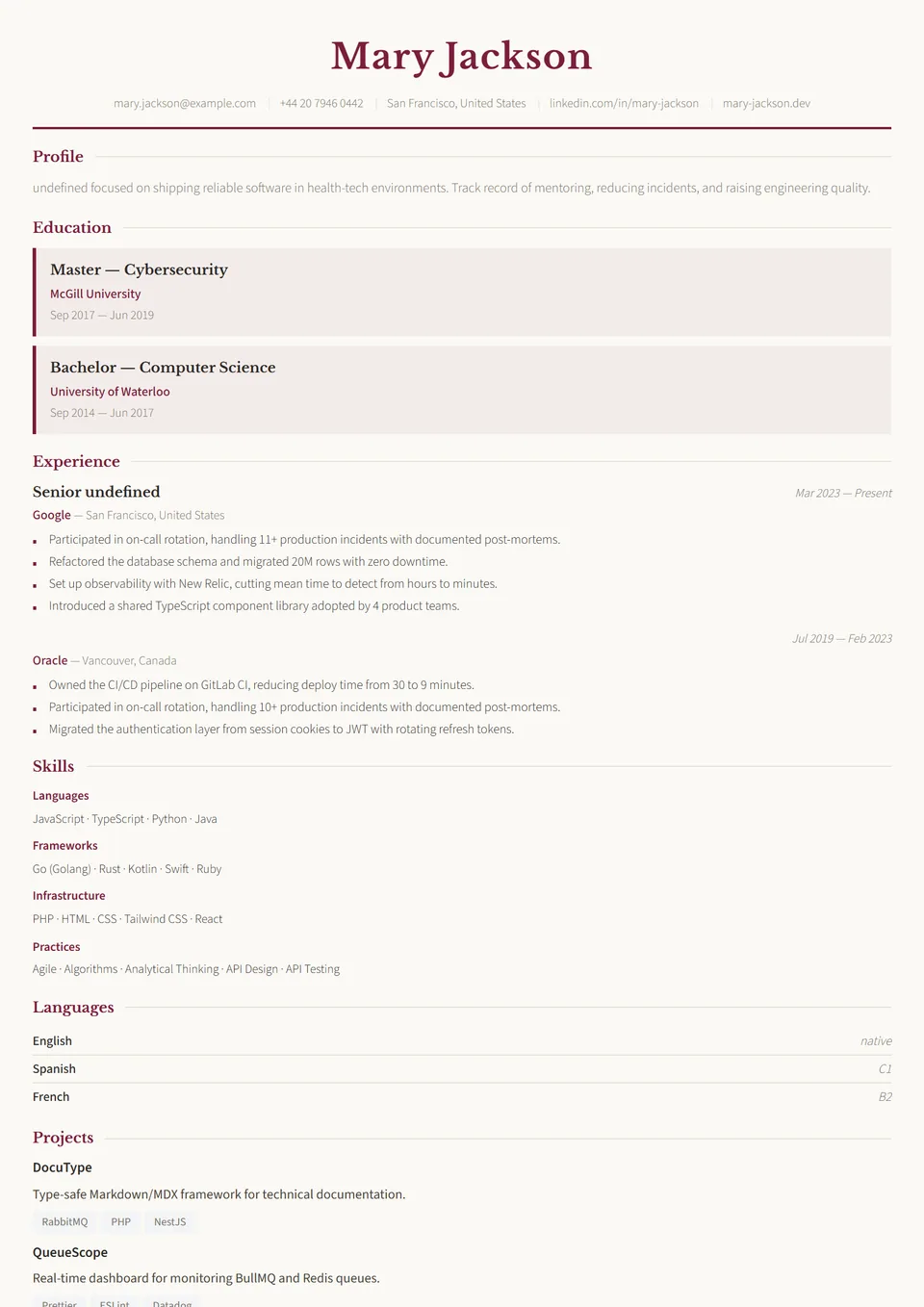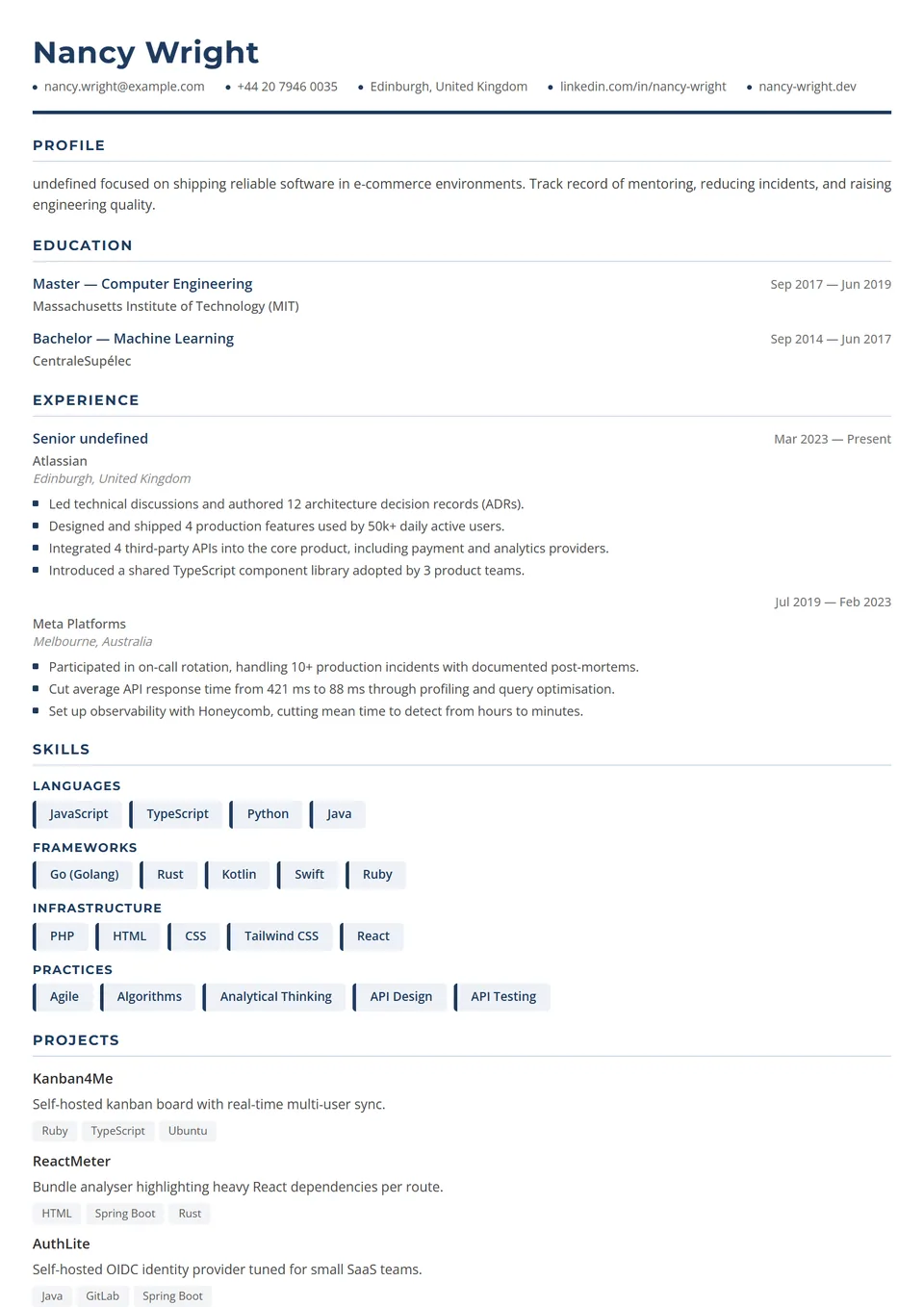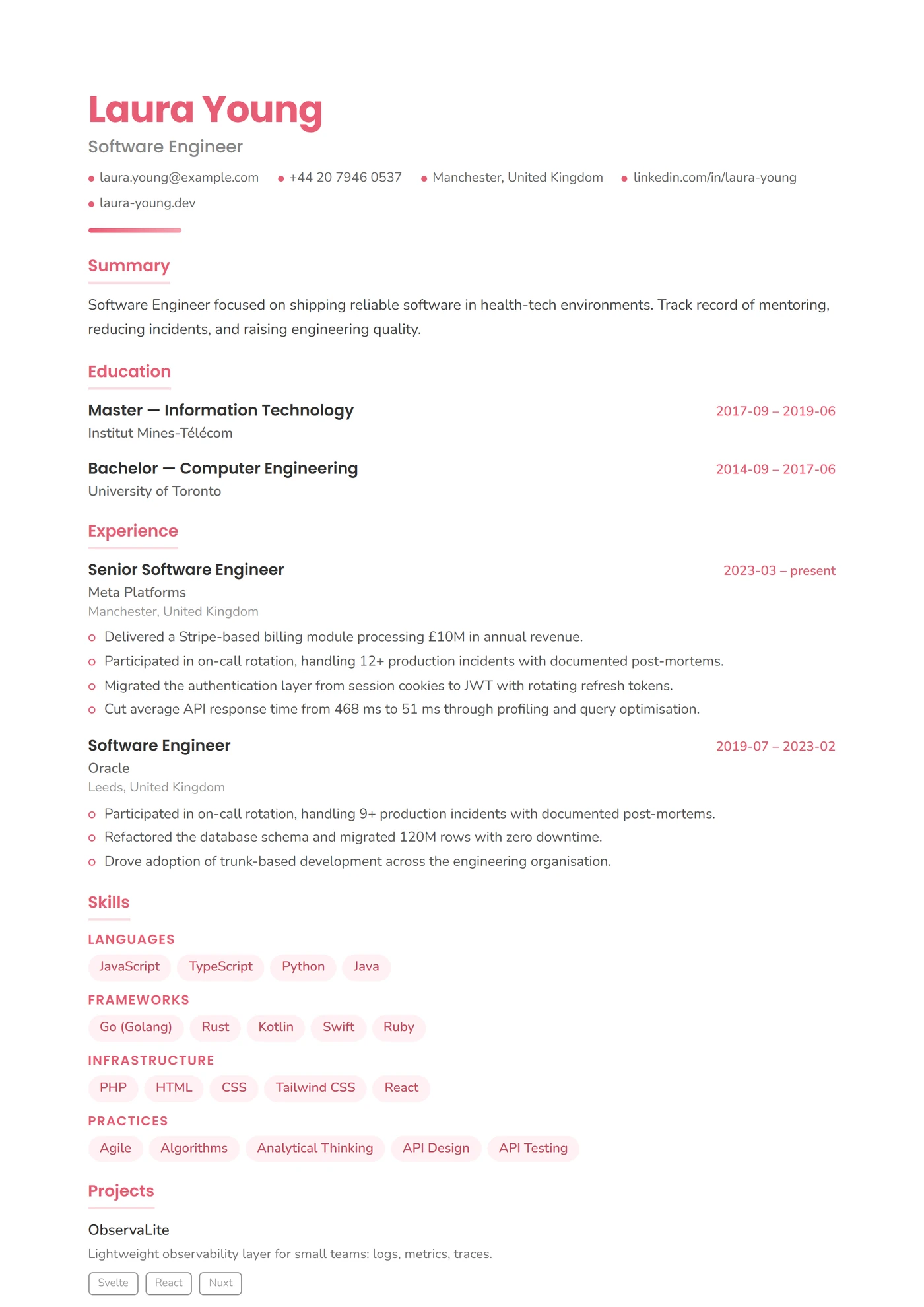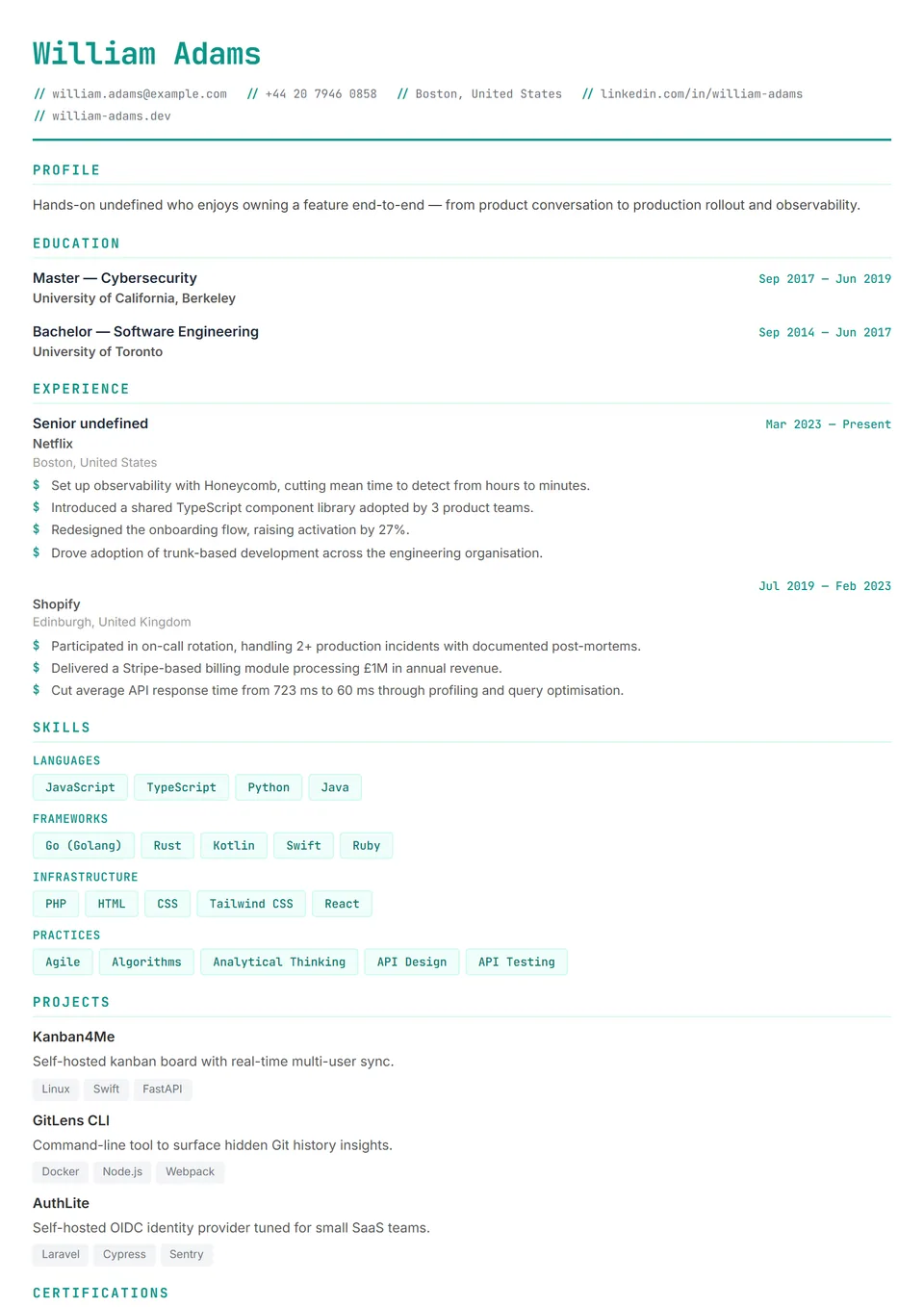
About this template
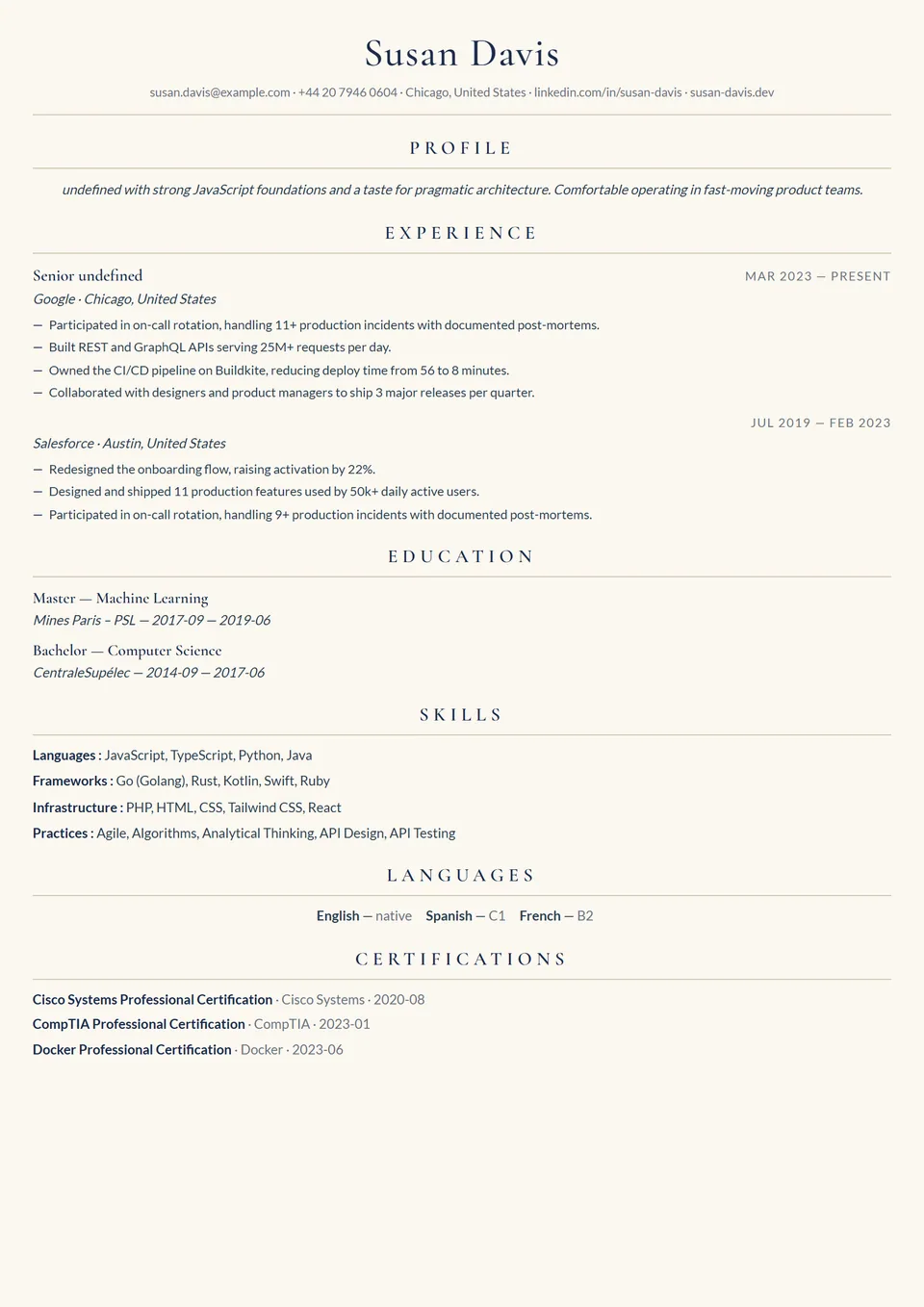
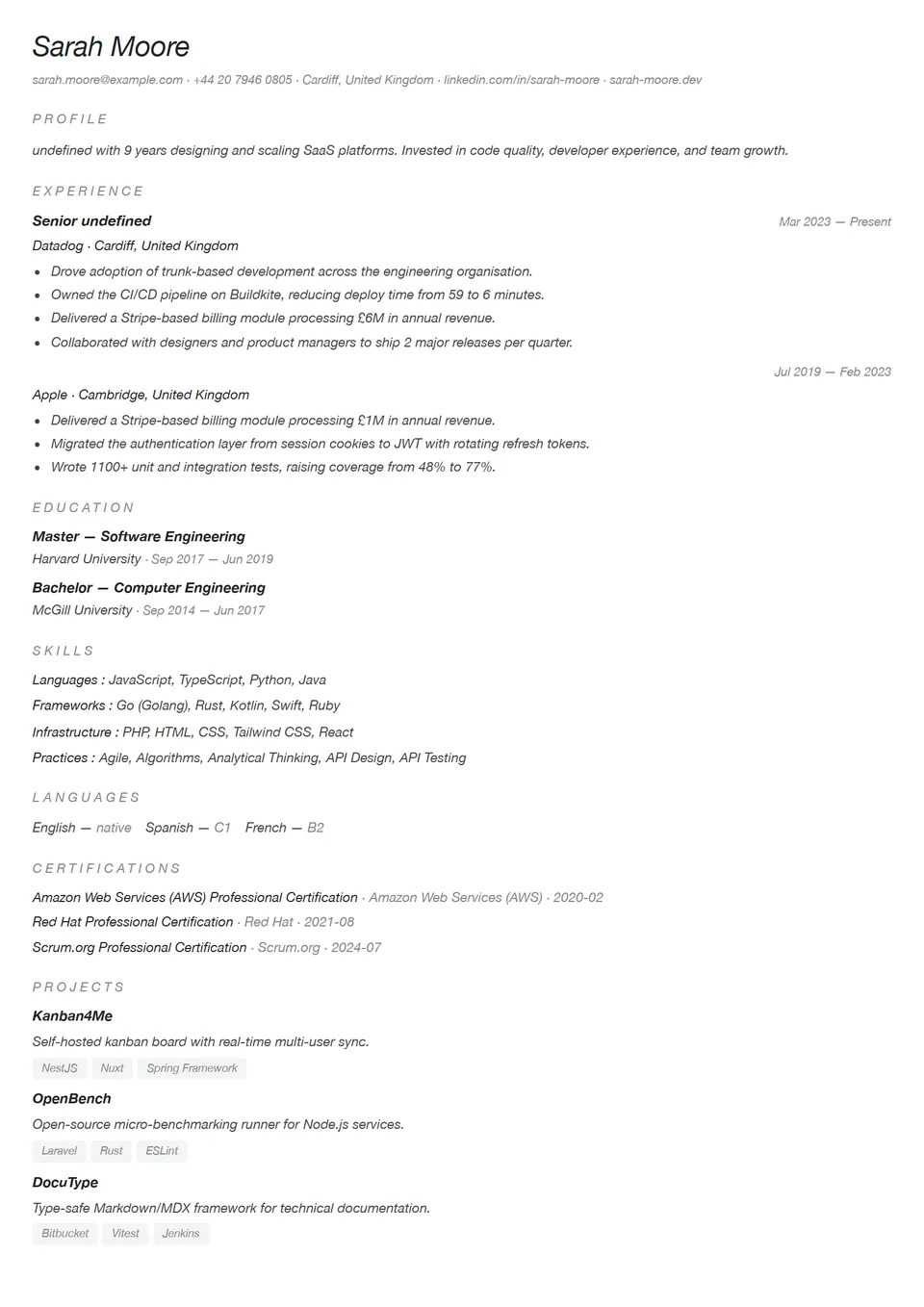
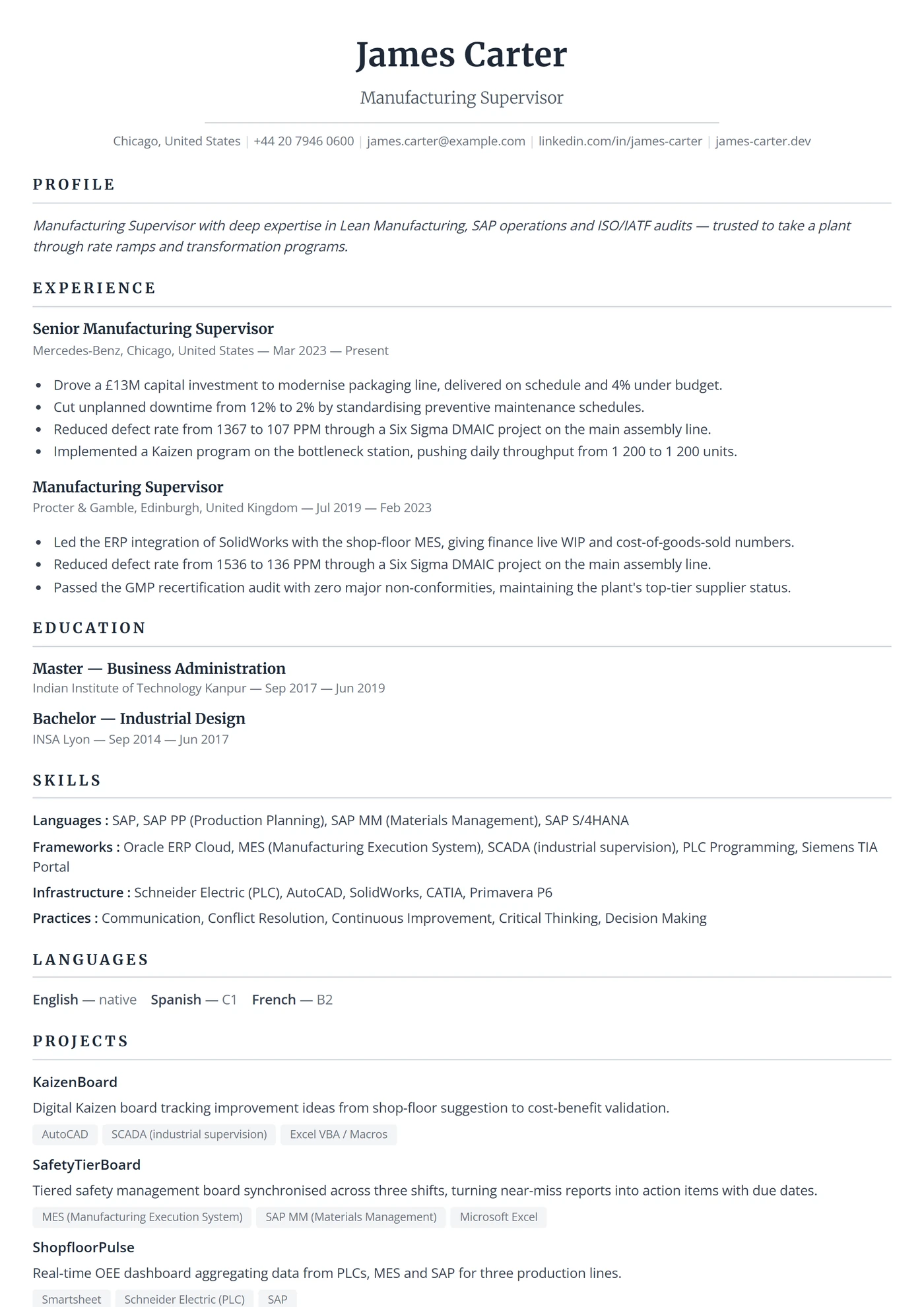
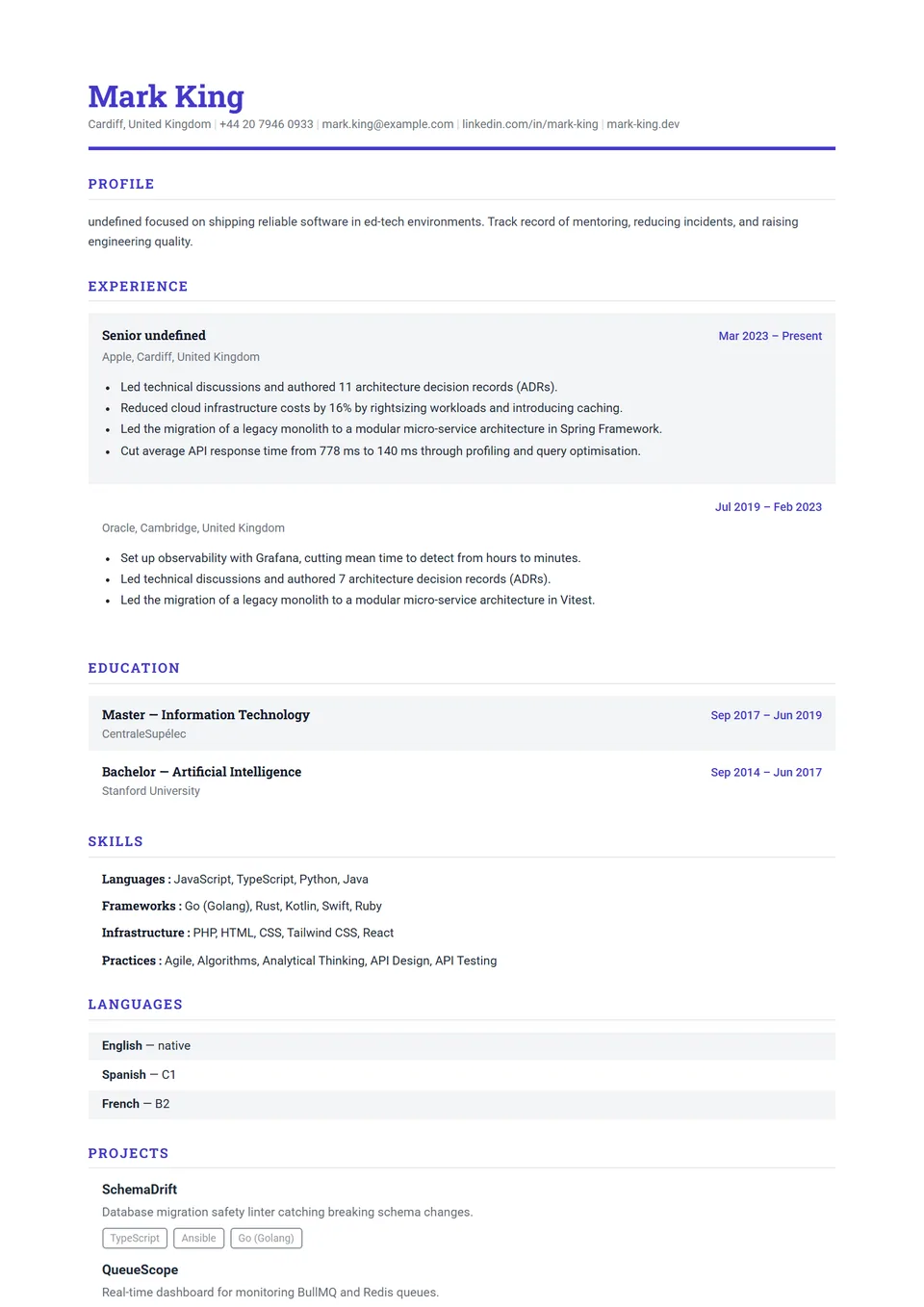
The Social Work template is an academic CV in Nunito with a warm-brown accent — calibrated for social-work academics whose practice and research are intertwined. Sections cover community partnerships, action research and policy contributions. The layout parses through Workday, Interfolio and the recruitment platforms of social-work schools (Columbia School of Social Work, NYU Silver, Boston University SSW, Glasgow School of Social Work, EHESP, ETSUP).
Who is it for?
It fits researchers and tenure-track faculty in social work, social intervention and social policy, senior practitioners (residential care directors, social services inspectors) transitioning to research-active positions, candidates for CNU section 19 and MCU posts at EHESP, action-research experts competing for sponsored chairs funded by county councils or family-allowance funds, and social-policy fellows at IRDES, IPP, Sciences Po LIEPP, the Urban Institute or Brookings Center on Children and Families.
How to use it
Five blocks structure the document — Research (axes aligned with the host lab, with fieldwork or population studied), Publications (Social Work Research, British Journal of Social Work, Research on Social Work Practice, Journal of Social Work, French Vie sociale), Community partnerships and action research, Policy contributions (parliamentary reports, advisory work for state agencies, child-welfare audits), Teaching and continuing education. For state-agency and county-council partnerships, state the nature (research, expertise, evaluation) and the period. Useful long-tail queries: 'social work professor CV template', 'social policy researcher tenure-track resume', 'action research academic CV', 'child welfare faculty CV', 'CNU section 19 candidate CV'.
Frequently asked questions
How do I present action research without confusing it with consulting?
Action research mobilises a formalised methodological protocol (theoretical framework, data collection, peer-reviewed validation) and leads to academic publication; consulting delivers an expert report without peer review. Reserve the Publications section for the former and create a 'Policy contributions' section for the latter. A CNU section 19, EHESP or Columbia SSW committee reads the difference instantly — blending the two raises a red flag on methodological discipline.
Should I quantify the impact of state-agency or county partnerships?
Yes where possible. State the number of beneficiaries covered ('evaluation deployed across 40,000 family-allowance recipients in Île-de-France', 'longitudinal study of 1,200 children in foster care across three states'), the duration of the partnership, and the deliverables produced (report, practice guides, training videos). For chairs sponsored by county councils or state agencies, these metrics count as much as a BJSW publication for the hiring committee.
Does the template work for a child-welfare or social-services profile?
Yes. Use a 'Field and population' section that specifies the population studied (children in foster care, unaccompanied minors, young adults aging out of care, families in education-supportive intervention) and the institutional setting (state agencies, county departments, family courts). For CNU 19, EHESP and Columbia SSW committees, this fieldwork granularity is expected — work on foster care in California reads differently from work on UASC in Greater London, and committees know it.